What Happens If A Tornado Hits a Nuclear Power Plant?

By Thom Hartmann A...
 The nuclear power plant in Braidwood Illinois narrowly avoided a direct hit from a tornado on Monday.
Braidwood provides electricity for much of Chicago. And even though it’s built to take a direct hit from a tornado - the plant did suffer damage to some of its power lines and utility poles.
Exelon, the owner of the Braidwood plant, claims that they’ve learned from the Fukushima disaster and have additional safety measures in place. But officials at Tepco - the Japanese private utility that owns Fukushima - had also claimed that their company had done everything possible to protect the Fukushima power plant from tsunamis - a claim that has now been seen to be less than true.
A recently disclosed document shows that company officials had been warned in 2008 that the plant needed greater coastal defenses to protect it from larger tsunamis than had been previously recorded in the area.
That prediction turned out to be disastrously true - but company officials never did upgrade the plant.
So the end result was a triple meltdown that sent radioactive material into the Pacific Ocean and into the wind currents that blow across the Ocean - and over 300,000 people had to flee the immediate area.
But with both of these cases, it’s not just about the potential disaster of radiation covering the planet, or even the fuel tanks somehow rupturing and leaking material into the groundwater. It’s about the vulnerability of our over-centralized electrical grids.
Nuclear power isn’t just dangerous - it’s a cornerstone of a centralized electrical grid system from the 19th century that’s both inefficient - and insanely vulnerable.
On June 29, 2012 a line of thunderstorms blowing across the US knocked out power for almost 4 million people ranging from Indiana to Delaware. That same year in India featured the largest blackout in the history of the world when over 320 million people - about 5% of the world’s population - were left without power when 32 gigawatts of generating capacity was taken offline.
The blackout across India was caused by extreme heat; consumers used more electricity and the demand spike caused a cascade of power failures that lasted for two days.
In India, power outages are so frequent that private companies often build their own off-grid power stations so that factories do not have to halt production when the national grid fails.
And that’s how we need to start thinking. We need to move towards a decentralized and community-based electrical system.
Worldwide we’re seeing the cost of installing wind turbines and rooftop solar panels plummet to the point where Germany now generates almost 40 gigawatts of electricity from SOLAR ALONE. And more than half of that electricity was generated from rooftop solar panels.
Think about that. The largest blackout in history was because 32 gigawatts of oil and coal fueled power plants were forced offline.
German solar capacity could have provided electricity for those 320 million people - and there would have been electricity to spare!
There’s no question anymore of whether renewables can substitute for nuclear, coal, and natural gas in terms of production - they can, and at the same or lower costs. What we need to be asking is how we will integrate renewables into our national grid for generating - and distributing - electricity.
When we first introduced electricity to cities, there was a technological rivalry between Edison’s direct current lines and Tesla’s alternating current lines. It was called the War of Currents and it ultimately shaped how our cities look and how the world gets its electricity.
That was a time when electricity HAD to come from centralized coal burning power plants. They would burn coal to make steam that would be used both to spin giant generators for electricity and to warm nearby buildings within the city.
Our grid has gradually evolved from that idea to a national scale. So that now Chicago is mostly powered by a nuclear power plant located 60 miles outside of the city. That’s 60 miles of vulnerable and inefficient lines running through Tornado Alley between one of America’s largest cities and an aging nuclear power plant.
What could possibly go wrong?
But even when our current infrastructure is fully functioning, roughly 10 percent of all electricity produced in America is simply lost in the transmission lines. And the longer the lines, the greater the losses.
Which is why it’s time to invest in small-scale, locally-generated renewable energy.
We need wind turbines and solar farms at the community level and rooftop solar at the household and commercial business level. We need to make our transmission lines shorter and more efficient. And we need to add storage capacity to our electrical grid so that when we have too much solar and wind energy, we can store it for a rainy day.
Meltdowns aren’t the only issue with nuclear. And climate-damaging CO2 emissions aren’t the only issue with natural gas and coal.
It’s time to stop thinking of “energy independence” as something for a state or a country - and instead to build out small-scale local renewable energy so that every community and every neighborhood can have their own energy independence.
Comments

#2
A quack-quack here and a quack-quack there... here a quack, there a quack.... ee-eye-ee-eye-ohhhh!
I don't see anyone taking your side except that wienie-sucking bimbo.

#3
Brilliant response Dorothy, because you know nothing about a subject, you feel you must bully those that do. There comes a time when you need to sit down, shut up and learn. Now is that time.
#4
Get lost somewhere in Oz, bimbo?
Thom's Blog Is On the Move

By webmaster
 Hello All
Thom's blog in this space and moving to a new home.
Please follow us across to hartmannreport.com - this will be the only place going forward to read Thom's blog posts and articles.
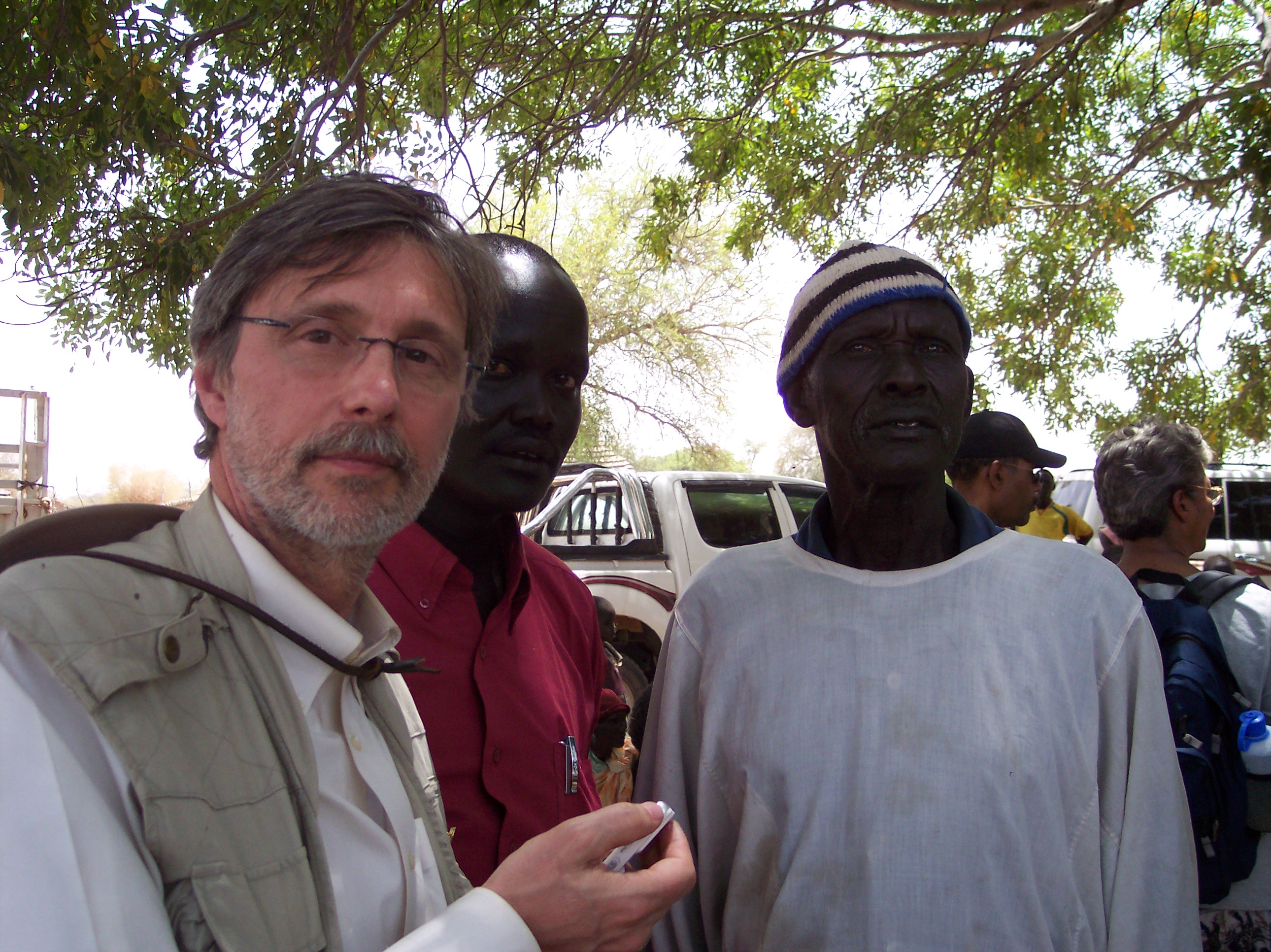
Images of Thom
From Cracking the Code:
"Thom Hartmann ought to be bronzed. His new book sets off from the same high plane as the last and offers explicit tools and how-to advice that will allow you to see, hear, and feel propaganda when it's directed at you and use the same techniques to refute it. His book would make a deaf-mute a better communicator. I want him on my reading table every day, and if you try one of his books, so will you."
From The Thom Hartmann Reader:
"In an age rife with media-inspired confusion and political cowardice, we yearn for a decent, caring, deeply human soul whose grasp of the problems confronting us provides a light by which we can make our way through the quagmire of lies, distortions, pandering, and hollow self-puffery that strips the American Dream of its promise. How lucky we are, then, to have access to the wit, wisdom, and willingness of Thom Hartmann, who shares with us here that very light, grown out of his own life experience."
From The Thom Hartmann Reader:
"Thom Hartmann seeks out interesting subjects from such disparate outposts of curiosity that you have to wonder whether or not he uncovered them or they selected him."

Wonderland there is a job opening for you on CNN. They love how you ignore all issues, could care less about ethics, avoid facts & rational argument at all costs. The very things Thom Hartmann constantly complains about how your fav MSM treats Bernie Sanders. Sanders tries to stick to the issues, wants to talk facts, avoids personality trivia, insists on ethics. Your MSM hates issues, hates facts, hates honest debate, likes popularity contests like your "..who's been won over by this dude.." poll.
Think of it, wonderland you could be Erin Burnett's or Wolf Blitzer's right hand man.