The American Military Junta

By Thom Hartmann A...
 America is now officially being ruled by a military Junta. That’s right. Much like the military government in Chile that was led by General Augusto Pinochet, our military now has expansive powers, which infringe upon our Constitutional rights. Back on December 31, 2011, President Obama signed the National Defense Authorization Act (the NDAA) into law for the fiscal year 2012.
The NDAA is a bill that is passed into law every year, which allows the government to continue funding national security and military operations for the following fiscal year. But the 2012 bill wasn’t your average NDAA bill. The 2012 version of the NDAA gave the federal government vast new powers to add to its arsenal in the name of fighting terrorism.
Opponents of the act and even some of its sponsors believe that it gives the federal military the power to carry out the policing of American citizens, something that’s been off the books in America since the Posse Comitatus Act was signed into law back in 1878.
Many believe that the NDAA gives dictatorial powers to the federal government and military, because it allows our military to arrest any American citizen without a warrant, on American soil, and to hold an American citizen against their will for an indefinite amount of time without being criminally charged.
In January of 2012, journalist Chris Hedges, along with attorneys Bruce Afran and Carl Mayer, sued the federal government over Section 1021(b)(2) of the 2012 NDAA. According to the lawsuit’s website, StopNDAA.org, that provision, “includes undefined terms such as 'associated forces' and 'substantial support' – terms that government attorneys refused to clarify ... The right of the US government to detain anyone, anywhere without charge until 'the end of hostilities' is now codified into law.”
Later in 2012, U.S. District Judge Katherine Forrest declared that part of the NDAA was indeed unconstitutional. In her decision, Forrest wrote that Section 1021(b)(2) of the NDAA echoed the 1944 Supreme Court ruling in Korematsu v. United States, which let our military detain over 100,000 Japanese-Americans during World War II, and throw them in internment camps without due process.
The federal government appealed Forrest’s ruling, asking the 2nd Circuit Court of Appeals for a stay of Forrest’s ruling. The 2nd Circuit agreed with the government’s request for a stay, and ultimately tossed out Forrest’s decision altogether. After that decision, Hedges, Afran, Mayer and the lawsuit’s other plaintiffs asked the Supreme Court to hear the case.
Last Monday, the Supreme Court announced that it would not be hearing the case. After learning of the Supreme Court’s decision not to hear the case, attorney Carl Mayer said that, “In declining to hear the case Hedges v. Obama and declining to review the NDAA, the Supreme Court has turned its back on precedent dating back to the Civil War era that holds that the military cannot police the streets of America. This is a major blow to civil liberties. It gives the green light to the military to detain people without trial or counsel in military installations, including secret installations abroad. There is little left of judicial review of presidential action during wartime.”
And, in a piece over at Common Dreams, Chris Hedges writes that, “In refusing to hear our lawsuit the courts have overturned nearly 150 years of case law that repeatedly holds that the military has no jurisdiction over civilians.”
Our military, thanks to the wording of the NDAA, now has the power to label us terrorists, capture us, lock us up in jail, and hold us there without any regard for our Constitutional rights to due process or to a fair trial. Section 1021(b)(2) of the 2012 NDAA trashes our Constitution, and the very freedoms that our Founding Fathers fought and died for.
Despite what the Supreme Court may think, our Constitution still says we have the rights to due process, to a free trial, and to not be thrown in jail by the military. In this case, a highly reactionary Supreme Court has thrown away nearly 200 years of historical precedent, and turned its back on the American people.
I want my Constitution back.
Comments

#2
How do you reconcile forcing a child or anyone else to swear an oath of any kind after hearing this scripture.
I also agree that no one should be made to say the pledge in a public school. And, around here, they don't do it in school anymore.
I also, personally, don't force my students to do it. If they don't want to do it, they still have to be quiet while others do it. But I work with 12-14-year-olds, and I try to treat them like adults.
According to Catholic teaching, and oath is "an invocation to God to witness the truth of a statement". I admit I had to look that up just now...
On the other hand, a pledge is "a promise". Which to me makes it seem like a pledge is between people, and an oath is between a person and God.
I would also say that the Pledge of Allegiance, like an invocation before a town council meeting, has value as a tradition. Catholic schools started doing it during the waves of diverse Catholic immigrants in the 1880s-1920s, either as a way of making everyone feel like they had some shared culture, or indoctrinating them into the fascist American system, depending on who you ask.
Also, the rule to do the Pledge comes from the school board, not the Pope. Our school board is three people (the whole school is about 200 students). If any parent wants to complain, they can take it to the school board. If a different private school doesn't want to do it, that's their perrogative.
#3
DAM - Mind if I ask you a personal question about your own religious beliefs? Actually a few things I've always wanted to ask. Well, first I would need to know if you were Atheist or Agnostic or something else. If you don't want to share, that's ok.
#4
Quote ChicagoMatt:On the other hand, a pledge is "a promise". Which to me makes it seem like a pledge is between people, and an oath is between a person and God.
"...one nation. under God, indivisible, with liberty and justice for all."
There is no difference between a "Pledge of Allegiance" and an oath. The are the exact same thing.
#5
Quote ChicagoMatt:Well, first I would need to know if you were Atheist or Agnostic or something else.
ChicagoMatt ~ I was a Catholic Student and altar boy until the age of 16. I had a deep faith since birth until I lost it in High School. After that, I was a devout atheist for 8 years. I was very happy. My contention was that Christ didn't exist; however, his stories and it's teaching were honest and profound. Therefore I resigned to live my life by them despite not believing in the person anymore.
At the age of 25 I experienced a very profound divine intervention in my own life. The experience lasted about a year and a half. Nothing spectacular, just God introducing himself to me on the personal level and saying, "Hello." It was an experience that had changed my life forever.
As a result, to this day I firmly believe in God. However, I equally firmly do not believe in Churches. It was a Church that drove the faith out of me as a child and if not for the grace of God it would still be gone. Actually, I guess you can say that deep down I hate Churches. I despise their phony twisted teachings and dogma and how they manipulate people.
It is God who delivered me and showed me the truth. If my perspective differs from your Catechism that would be the reason I can assure you.
I can also assure you that you will not hear another religious perspective from anyone else on this blog--or anywhere else--that is exactly like mine. I hope you have enjoyed it; and, I hope that answers your question.
Remember, the only real word of God in the Bible are the 10 commandments and the testimony of Jesus. Everything else is the imperfect work of man. All the churches love to exploit that imperfection for their own good. Don't fall for it.

#6
I accept only about five or six of the Ten Comandments, if that many.
#7
ok
#8
The pledge of allegiance was written by a socialist. The "under God" part was added in 1954 during the McCarthey Era, without consulting the author, to serve as a weapon of intolerance.
The original Soviet Constitution was very wise. It guaranteed complete freedom of religion, it forbade religious persecution (it was thinking, mainly, of Anti Semitism) and forbade religious instruction of anyone who was under the age of 18. The Soviet Union was initially a very hopeful, ambitious, idealistic and humanistic experiment to create a just, benevolent and enlightened society, informed by science and free of prejudice and superstition.
#9
As was posted when the NDAA issue was first discussed in 2012, this provision does not apply to US citizens:
http://www.thomhartmann.com/users/dominicmanzer/blog/2012/01/ndaa-does-not-apply-us-citizens
Norman Goldman, who is an attorney, says that he has read the NDAA thoroughly and agrees that this provision does not apply to US citizens. It would be interesting to know what Mike Papantonio has to say about this subject.
#10
Quote anarchist cop out:I accept only about five or six of the Ten Comandments, if that many.
anarchist cop out ~ I would say that is wise. The Ten Commandments is the only part of the Bible claimed to have been written by the hand of God himself. However, the Bible also warns about "false Christs" who will come and deceive many. Therefore, I think it is important to keep an open mind about anything. It is all of our responsibility to look at any message that is claimed to come from God and ask ourselves in our own hearts, "Would the God I love actually say something like that?"
Then act accordingly!
I think if everyone looked at such messages that way even Isaac would have been spared a great traumatic experience at the hand of his father Abraham.
#11
Sorry it took so long to reply to this.
I've posted some serious questions about Atheism on some anonymous blogs before, but all I ever get are teenagers attacking the church, not serious answers. You've obviously scholarly and instrospective, so I was going to ask you. But since you're not Atheist, I don't think you could answer it well.
But basically, I wondered what kept someone who didn't believe in God or an afterlife going? Like, why bother to do anything, if the ultimate end result was nothing? I got a lot of people saying they wanted to help people or make the world a better place, but it all seems so pointless, to me at least, if everyone ends up non-existant anyway. I'm not sure if I'm wording the question correctly.
#12
Palindromedary ~ ChicagoMatt just asked you a question in post #62 if you feel so inclined to respond.

#13
The American Junta? - - You guys might like this timely political parody, which really covers all current issues... from racism to realism, it's all here - - This is a novella that I wrote that places Obama versus Putin in a political storm with a military conclusion. - - ("..finally, an American Coup d'Etat..") - - http://kvisit.com/S38ScAw - - "America at the Tipping Point" - - In an ironic twist, the Russians use Snowden's NSA information to spy on Obama. Finally, in the end, the powers that be... the junta... are so desperate for real change, that they try to make a "Faux-conservative" out of Hillary, and an evil and duplicitous Queen is anointed, but she's controlled by the equivalent of a privy council... The Second-Constitutional-Convention is finally outlined in the last chapter, with a return to a true Representative form of government. If I were Tom Clancy, the action would have been better. In any event, I'm proud of the way that I wrote the political intrigue, and I believe that I captured the true natural sleaziness of the inside-the-beltway crowd...Enjoy.
Long URL - -
http://www.keepandshare.com/doc/6759007/america-at-the-tipping-point-522k?da=y
Thom's Blog Is On the Move

By webmaster
 Hello All
Thom's blog in this space and moving to a new home.
Please follow us across to hartmannreport.com - this will be the only place going forward to read Thom's blog posts and articles.
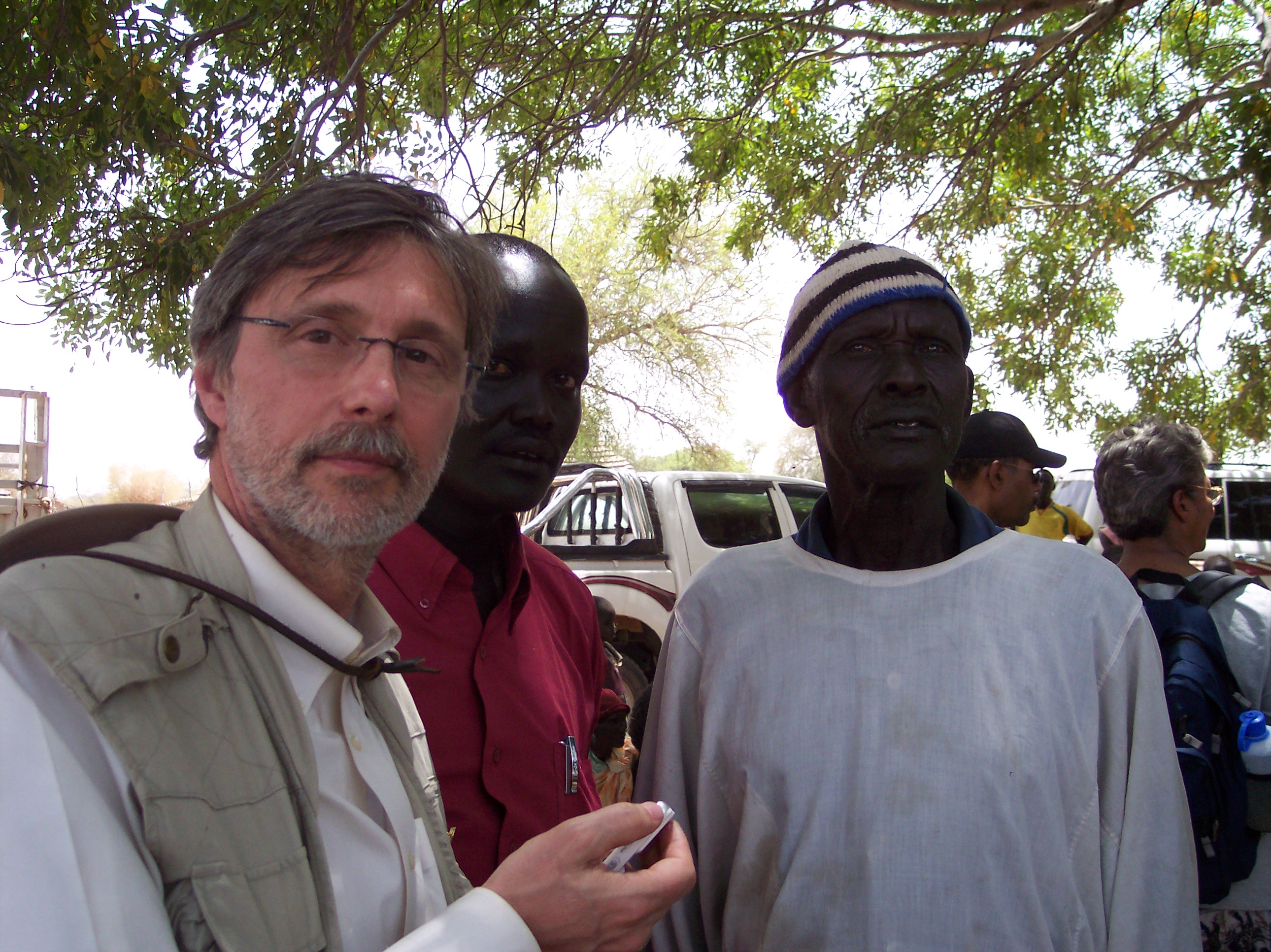
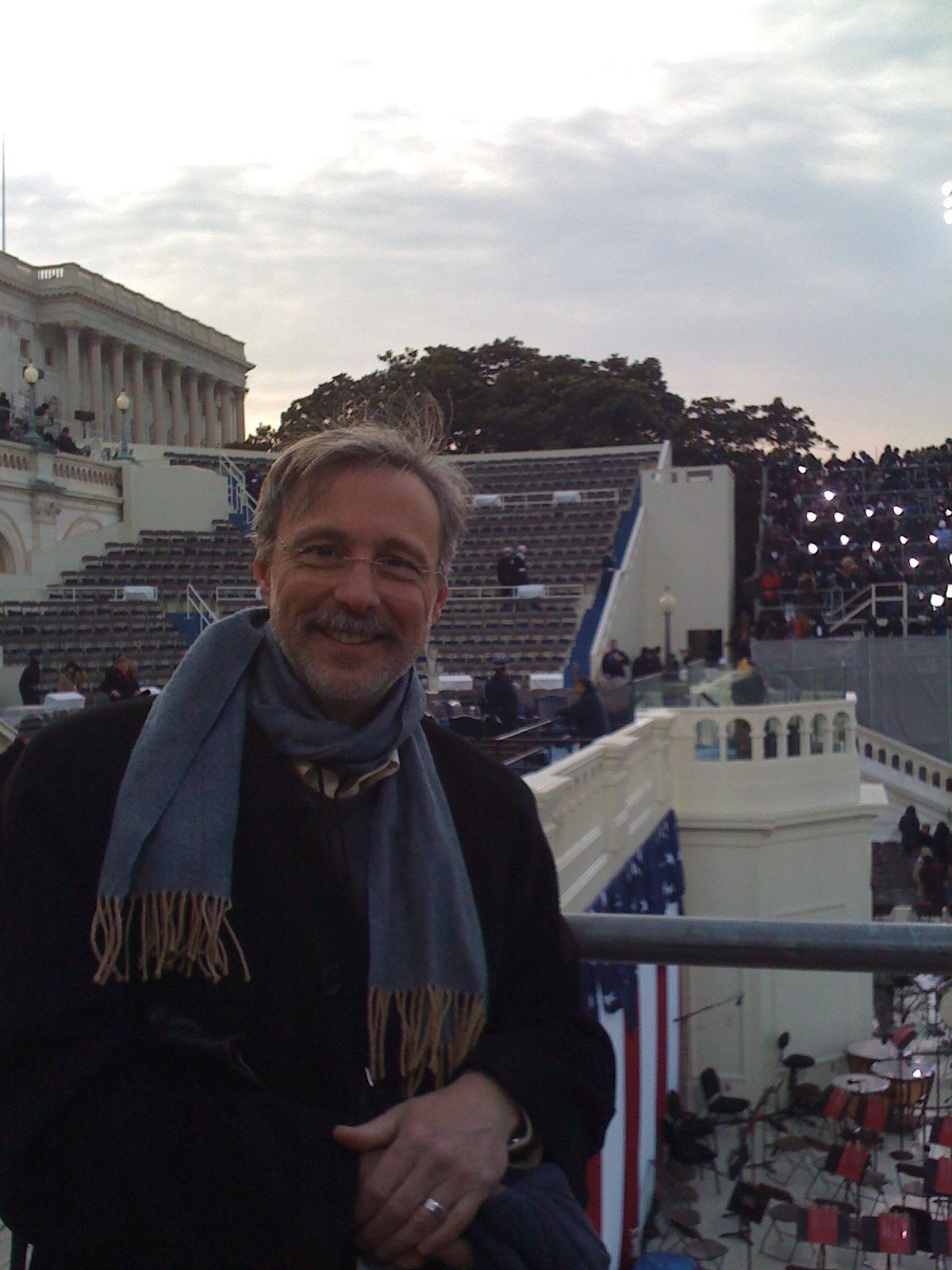
Images of Thom


From Unequal Protection, 2nd Edition:
"If you wonder why and when giant corporations got the power to reign supreme over us, here’s the story."
From Screwed:
"Hartmann speaks with the straight talking clarity and brilliance of a modern day Tom Paine as he exposes the intentional and systematic destruction of America’s middle class by an alliance of political con artists and outlines a program to restore it. This is Hartmann at his best. Essential reading for those interested in restoring the institution that made America the envy of the world."
From Unequal Protection, 2nd Edition:
"Beneath the success and rise of American enterprise is an untold history that is antithetical to every value Americans hold dear. This is a seminal work, a godsend really, a clear message to every citizen about the need to reform our country, laws, and companies."

Matt and Alice ~ I just want to point out again that I consider the "Pledge of Allegiance" as an equally offensive act to require amongst children. I'm not sure how you both feel but in my opinion that "Pledge" is nothing more than psychological child abuse. It is the forcing of the swearing of an oath on an age group that is not yet at the age of consent to swear an oath by any other law. Personally I object far more to the "Pledge of Allegiance" than I do to public prayer. At least in public prayer adults are involved who have the reasoning ability to object. Children do not!
ChicagoMatt ~ I place this question to you. How do you reconcile forcing a child or anyone else to swear an oath of any kind after hearing this scripture.
I have always wondered how Catholic School teachers in particular manage to reconcile that conflict of interests?