The Thom Hartmann Program - Aug 30th 2018

By louisehartmann
It seems it's all racism, all the time w/the GOP...Neo-Nazi robocall hits Iowa on Molly Tibbett’s murder: “KILL THEM ALL. ” Richard Wolff drops by about the National Debt. Is it a disaster or an OK thing? Also - Trump & The National Enquirer - Is the Economy Here To Serve Us Or Are We Here to Serve the economy? Has America Become a "Grifter" Country? Check out our short podcast today https://www.thomhartmann.com/hartmann-report-podcast
Thom
Comments

#2
Teaching Tolerance Issue 56, Summer 2017 - Feature (fair use)
"Walking Undocumented
Wildin Acosta will walk across the graduation stage in June—but he almost didn't make it. Read about his incredible journey and the team of student journalists and teachers who helped make it happen."
By Bryan Christopher:
In January 2016, 19-year-old Wildin Acosta hurried out of his family's apartment on his way to what he thought would be a typical day at Riverside High School in Durham, North Carolina. Backpack in hand, the senior drew up short when he encountered a sight he prayed he'd never see: six plainclothes Immigration and Customs Enforcement (ICE) officers waiting for him with a deportation order.
Wildin's father, Hector, watched helplessly as his son was cuffed and taken away.
It was an easy catch for ICE. Wildin is an undocumented immigrant who lives out of the shadows so that he can pursue his education. But the process of deporting Wildin wouldn't be so easy. A personable, athletic young man, he was well regarded by friends, classmates and teachers at Riverside. Even as the wheels were set in motion to send him back to a life-threatening situation in Honduras, allies Wildin didn't even know had started joining forces to fight for his freedom.
The Journey
Wildin's journey began in 2014 in the town of Silca in Olancho, Honduras. He was preaching the gospel in a park when members of Barrio 18, a violent gang, threatened to kill him unless he joined their crew.
Wildin knew better than to wait for the gang's second warning. By his own account, he set out on foot through Guatemala and, within days, had bribed his way into Mexico. He then rode buses to the Texas border, where Mexican border officials took what money he had left and allowed him to cross. On the U.S. side, he turned himself in to immigration officials, a refugee seeking asylum. He spent eight days in custody at an ICE facility before being released to join his family in North Carolina, where his parents had been living—also undocumented—since he was a small boy.
Wildin spoke little English but soon settled in and began to thrive at Riverside High School. He made friends quickly, joined clubs and played on community soccer teams. He was on track to graduate in June 2016. "What stood out to me the most was his drive," says Spanish teacher Ellen Holmes, whose club Destino Success included students who tutored Wildin. "He was a good student, balanced a part-time job, soccer and clubs, and was really involved at home in addition to the everyday issues that undocumented students face."
The ultimate issue came calling that chilly January morning. Instead of showing up for another day at school, Wildin found himself at Stewart Detention Center in Lumpkin, Georgia. His deportation back to Honduras seemed like a done deal. "I asked myself one question," Wildin recalls about his time at Stewart. "We all asked ourselves the same question: 'Why me? Why me and not someone else?'" He was alone, lacking legal representation and facing a potential death sentence once he stepped off the plane in Olancho.
Except that Wildin wasn't alone.
The Wildin Team
When news of Wildin's arrest reached school, it fell heavily on his friends and teachers alike. It also deeply disturbed four journalism students: Juliana Rodriguez, Olga Bonifacio, Aldair Corrales and Maggie Johnson*. As they followed the threads of the story, they learned that Wildin was a second-semester senior, a dedicated student and a good guy with a clean record. They saw their own fears reflected as well; three of the four are also undocumented immigrants. These three are recipients of the Deferred Action for Childhood Arrivals program and know the anxiety of living in households with mixed-immigration status.
"I had so many friends who are immigrants," says Maggie, who is a native-born citizen, now a first- year student at Meredith College in Raleigh, North Carolina. "I saw how they were already having struggles in the communities. I realized that it wasn't only Wildin being detained. It could be my friends, too."
Galvanized by the injustice of Wildin's situation, the four students decided to take action. They reached out to attorneys, community organizations and local officials—anyone who could shine a light on Wildin's predicament. They started raising local awareness via social media using hashtags like #FreeWildin and #educationnotdeportation.
Many Riverside teachers took up the cause, too. They had witnessed the chilling effects of ICE raids on their students: increased anxiety and lower attendance rates as undocumented students grew more fearful that they would be deported or come home from school to find their families gone. Some educators reported their observations to Durham's Human Relations Commission. With the support of the city council and mayor, the committee asked federal officials to stop detaining and deporting the city's young people.
Citing the right of all students for equal access to public education regardless of immigration status, Durham's school board passed a resolution one week later asking ICE to suspend its actions in the community and release detained youths to their families. Wildin's arrest had become a rallying point for an alliance ready to fight for all of Durham's undocumented young people.
"It opened up a dialogue about students who are here but can't work or have received final orders of deportation and how scary that is," says science teacher Mika Twietmeyer. "I was worried for Wildin specifically, but the more I learned about the issue, the more concerning it became."
Keeping Up the Pressure
The voices for Wildin Acosta's release were growing louder, but not everyone supported the cause. Despite the school board's actions, Riverside High School itself did not make formal statements about Wildin or his case, and media were not allowed on campus. Teachers describe a sense that not all administrators had much sympathy for Wildin's circumstances.
"Many people were like, 'This isn't worth it...there's no point,'" says Juliana, one of the student members of the Wildin team. "They had this view of Wildin as a criminal and they didn't understand why we were fighting for him."
Undeterred by skepticism within the school community, Juliana, Aldair, Olga and Maggie kept the pressure on, continually asking, "Why can't Wildin graduate?" to anyone who would listen. They collected petition signatures throughout the district, organized public rallies and shared photos and videos through the social media campaigns they created. They even designed and handed out white wristbands as symbols of commitment to Wildin's cause.
"The kids did a great job reiterating that this was an education issue because his right to an education was being restricted."
Eventually, U.S. Representative G.K. Butterfield took notice. "Wildin's story is very powerful," says Butterfield. "It takes a story like Wildin's where a child—I want to emphasize the fact that he was a child—travels thousands of miles through several countries risking his life because the violence in his home country has become too great."
The Road to Washington
With 12 weeks to go in their high school careers, Olga, Aldair and Maggie—as well as Juliana, a junior—were consumed by Wildin's case, even as some of their classmates were losing focus. The week before Wildin's March 20 deportation date, Maggie asked for an extension on her schoolwork so she could submit a guest column to local papers calling for Wildin's release. Olga even missed class when the group traveled to Washington, D.C., to meet with members of the U.S. Department of Education to discuss the academic consequences of federal immigration raids.
As March wore on, the students were generating more media coverage than ever, but time was running out. Thirty-six hours before Wildin was scheduled to be deported, activists made one last plea to Washington late on a Friday night.
"We rallied downtown, in front of Butterfield's office," says Maggie. "We had his representatives on the phone, but no decision had been made yet about Wildin's scheduled deportation."
Finally, with Butterfield's urging, then-ICE director Sarah Saldaña delayed Wildin's deportation. One day later the Board of Immigration Appeals (BIA) agreed to reopen the case.
Their deadline extended, the four students met Butterfield in person when he visited Riverside in early April. Then, in May, Ellen Holmes took them to D.C. to speak to Secretary of Education John King Jr., to the Department of Homeland Security (DHS), to brief Congress and to meet the press.
Secretary King was familiar with Wildin's case and wanted to hear the students' perspective, but the meeting was tense. Representatives from the National Education Association and the National Immigration Project accompanied the Riverside contingent, but none of them had been told that DHS officials would also be in attendance. And, despite their best efforts to make a case for why Wildin should graduate, the students were not able to persuade King.
"The kids did a great job reiterating that this was an education issue because his right to an education was being restricted," Holmes says. "Secretary King disagreed and said we need immigration reform, but the kids kept defending the fact that Wildin deserved the right to an education."
The students walked away disappointed, but the adults were so impressed that they let them lead when speaking to the media and elected officials the next day.
"No one told us what to say or gave us guidelines when we briefed Congress," says Juliana. "For us to get to that point, we needed to have that moment with Secretary King to push us."
The Home Stretch
Juliana, Olga, Aldair and Maggie returned to Durham, and the three seniors took their final exams and prepared for graduation. It was June 2016, and Wildin was entering his fifth month at Stewart. It became clear that he would not earn his final three credits or walk with his class.
“When we realized he wouldn’t graduate, it was really hard to look back at all the work we’d done,” says Maggie. “I feared everything had been done for nothing and we hadn’t made an impact.”
Wildin’s mother, Dilsia Acosta, was a guest of honor at the ceremony. Aldair, the class president, gave a speech about Wildin’s journey, his current circumstances and the work still to be done. Hundreds of students wore the white wristbands, took photos and posted their support for Wildin on social media.
But the end of school didn’t mean the end of the road for Team Wildin. In July, two of his teachers visited him at Stewart Detention Center. By then, Wildin had been in custody for six months. He knew there were friends and advocates working on his behalf, but his time at Stewart was taking a physical and emotional toll.
“He looked at me and said things were not good,” Twietmeyer says. Sleep was difficult in the overcrowded facility, and there were worms in the food. Wildin disclosed that he had been placed in solitary confinement for translating letters for a fellow prisoner. One of his darkest moments, Wildin later said, was when he asked a guard when he might be free. “I don’t know why you’re here,” replied the guard. “I’ve seen your record.”
Finally, on July 19, the BIA reopened Wildin’s case. Three weeks later he was released on $10,000 bond, raised in just two days by the people of Durham in an effort led by the local organization Alerta Migratoria NC.
Wildin returned home on August 12 and, after two weeks of recovery, held a press conference. He recounted his experiences since leaving Honduras and vowed to help other undocumented students and families, especially his fellow detainees at Stewart. “If I can be a voice for my community, I will,” he said.
The Journey Continues
Wildin returned to Riverside the day after his press conference, stayed out of the spotlight and worked hard to pass his three remaining classes. He kept in touch with his former teachers and got to know some of the students who had advocated for him. Although his credits are now complete, he will walk at commencement in June 2017, and plans to enroll in community college and study engineering.
“Every time I saw him, he’d give me a hug and say, ‘Thanks for all you do and all you did,’” says Juliana. “Every single time.”
Wildin has also made good on his promise to help others. After the November election he spoke to a group of parents and teachers at a Durham elementary school about ways to support undocumented students, and he participated in rallies protesting the Trump administration’s immigration policies. In February he shared his story at a Riverside community forum. He again thanked the people who advocated for his release and urged the audience to make schools safer for all families.“I am a refugee. I am an immigrant,” he said. “It is because of your work that I’ve graduated.”
Riverside’s teachers and students have also become leaders. As new reports of security checkpoints and ICE raids emerge, teachers throughout the state are turning to them for advice.
“We’re focusing on rapid response,” says Holmes, who helped revise school board policies to strengthen students’ due process rights. “Knowing your rights, power of attorney, signing over guardianship and making sure families have emergency plans in place.”
As the fight continues for students caught at the crossroads of immigration and education, everyone looks forward to graduation. But Wildin’s own journey isn’t over; he still faces the threat of deportation while he awaits his August appeal trial. And immigrant families remain anxious about the uptick in ICE raids and the security of their families.
But on June 13, everyone will celebrate.
“Wildin is a success story that came out of our school and district,” says Holmes. “He represents what we would do for all of our students.”
“I picture Wildin sitting among us,” said Juliana, who will attend the University of North Carolina at Chapel Hill in the fall. “Someone talking about his experience. Everyone standing up and clapping for him. It’s something he deserves.”
* Names have been changed to protect the identities of the students.
Strategies for Successful Advocacy
Build credibility.
Know the facts, answer questions concisely and articulate how and why the issue affects your school and community. Share information through several communication channels. “Accurate information was really important,” says Maggie Johnson. “Kids were saying many different things and needed to know if our campaign was trustworthy. We didn’t want to portray a false image of what was going on.”
Find a rallying cry.
Pushing for policy changes, especially immigration reform, can be complicated. Find an angle that encourages others to advocate for a specific cause and outcome. Riverside students and teachers used “Why can’t Wildin graduate?” because it localized the issue and made their own perspectives more valuable.
Extend your reach.
Make your work visible through social media campaigns, customized clothing and posters. Foster relationships with other schools and community organizations. Riverside’s campaign took flight when advocates joined forces with other schools, education groups and community organizations like Alerta Migratoria NC.
Keep pushing.
There is nothing “slow and steady” about advocacy work. Progress will come very quickly at times, then not at all for days or weeks. Keep in touch with elected officials. Seek media coverage when necessary and always plan for the next step.
https://www.tolerance.org/magazine/summer-2017/walking-undocumented
#3
Parts 1 & 2)
10/22/18 from Truthdig / Axis of Logic (under Fair Use; Title 17 U.S.C. Section 107)
"American History for Truthdiggers: Original Sin"
By Maj. Danny Sjursen:
(Truthdig editor’s note: The past is prologue. The stories we tell about ourselves and our forebears inform the sort of country we think we are and help determine public policy. As our current president promises to “Make America great again,” this moment is an appropriate time to reconsider our past, look back at various eras of United States history and re-evaluate America’s origins. When, exactly, were we “great”?
The “American History for Truthdiggers” series, which begins with the installment below, is a pull-no-punches appraisal of our shared, if flawed, past. The author of the series, Danny Sjursen, an active-duty major in the U.S. Army, served military tours in Iraq and Afghanistan and taught the nation’s checkered, often inspiring past when he was an assistant professor of history at West Point. His wartime experiences, his scholarship, his skill as a writer and his patriotism illuminate these Truthdig posts.)
PART ONE
American Slavery, American Freedom (Colonial Virginia 1607-1676)
Origins matter. Every nation-state has an origin myth, a comforting tale of trials, tribulations and triumphs that form the foundation of “imagined communities.” The United States of America—a self-proclaimed “indispensable nation”—is as prone to exaggerated origin myths as any society in human history. Most of us are familiar with the popular American origin story: Our forefathers, a collection of hardy, pious pioneers, escaped religious persecution in England and founded a “new world”—a shining beacon in a virgin land. Of course, that story, however flawed, refers to the Pilgrims, and Massachusetts, circa 1620. But that’s not the true starting point for English-speaking society in North America.
The first permanent colony was in Virginia, at Jamestown, beginning in 1607. Why, then, do our young students dress in black buckle-top hats and re-create Thanksgiving each year? Where is the commemoration of Jamestown and our earliest American forebears? The omission itself tells a story, that of a chosen, comforting narrative (the legend of the Pilgrims), and the whitewashing of a murkier past along the James River.
The truth is, the United States descends from both origins—Massachusetts and Virginia—and carries the legacy of each into the 21st century. So why do we focus on the Pilgrims and sideline Virginia? A fresh look may help explain.
The Age of ‘Discovery’
When it comes to history—like any story—the starting point is itself informative. I taught freshman history at West Point, a far more progressive and thoughtful school than many readers probably imagine. Nonetheless, with cadets required to take only one semester of U.S. history, we had just 40 lessons to illuminate the American past. So where to start? The official answer—as in so many standard history courses—was Jamestown, Virginia, 1607.
That, of course, is a fascinating, perhaps absurd, choice. Such a starting point omits several thousand years of Native American history, of varied, complex civilizations from modern Canada to Chile. Time being short and all, 1607 remains a common pedagogical starting point. As a result, from the beginning, our understanding of U.S. history is Eurocentric and narrow (covering only the last 400 or so years). Consider that Problem No. 1.
Next, contemplate the language we use to describe the “founding” of new European colonies. This is, say it with me, the “Age of Discovery.” In 1492, Columbus discovered (even though he wasn't first) America. Now, that’s a loaded term. Isn't it just as accurate to say that Native Americans discovered Columbus—a lost and confused soul—when he landed upon their shores?
When we say Europeans discovered the “New World,” we’re—not inadvertently—implying that there was nothing substantial going on in the Americas until the Caucasians showed up. Europe has a dated, chronological history, reaching back at least to the Greeks, which most students learn in elementary school and later on in Western Civilization classes. Not so for the Native Americans. Their public history starts in 1492, or, for Americans, in 1607. What came before, then, hardly matters.
Inauspicious Beginnings
Englishmen came neither to escape religious persecution nor to found a New Jerusalem. Not to Virginia, at least. No, the corporate-backed expedition—by the Virginia Joint Stock Company—sought treasure (think gold), to find a northwest passage to India, and balance the rival Catholic Spaniards. But, first and foremost, they pursued profit.
The expedition barely survived. That should come as little surprise. They chose a malarial swamp for a home. The first ships carried mostly aristocrats—“gentlemen,” as they were then labeled—with a few laborers and carpenters for good measure. Gentlemen didn't work or deal with the dirty business of farming and settling. But they did like to argue—and there were too many “chiefs” on this voyage. The first party did not include any farmers or women. Only 30 percent survived the first winter. Two years later, only 60 out of 500 colonists survived the “Starving Time.” Over the first 17 years, 6,000 people arrived, but only 1,200 were alive in 1624. One guy ate his wife.
So why the disaster? Why the poor site selection and early starvation? First off, the colonists chose a site inland on the James River because they feared detection by the more powerful Spanish. But mainly the disaster came down to colonial motivations. Jamestown was initially about profit, not settlement. Corporate dividends, not community. This was the private sector, not a permanent national venture. In that sense, matters in early Virginia were not unlike modern American economics.
Saved by Tobacco, the First Drug Economy
They never did find much gold, or, for that matter, a northwest passage. Then again, they didn't all starve to death. Rather, the venture was saved by a different sort of “gold”—the cash crop of tobacco. Tobacco changed the entire dynamic of colonization and control in North America. Finally, there was money to be made. The Englishmen shipped the newest vice eastward and pulled a handsome profit in return. Our beloved forefathers were early drug dealers. More migrants now crossed the Atlantic to get in on the tobacco windfall.
The plentiful “gentlemen” of Virginia sought to re-create their landed estates in England. Despite significant early conflict with the native Powhatan Confederacy, large tobacco plantations eventually developed along the coast. Who, though, would work these fields? Certainly not the landowners. The burgeoning aristocracy had two choices: lower-class English or Scots-Irish indentured servants (who worked for a fixed period in the promise of future acres) and African slaves. Whom to choose? Unsurprisingly, ethics played little role, and cost was the defining factor.
When mortality was high in the colony’s early years, plantation owners favored the cheaper indentured (mainly white) servants. But as more families planted corn, kept cattle and improved nutrition, death rates fell and slaves became more appealing. After all, though expensive in upfront costs, slaves worked for life, and the slave owners got to keep their offspring. Nevertheless, for the first several decades, an interracial mix of slaves and servants worked the land in Virginia.
Bacon’s Rebellion and the American Future
The problem with the tobacco economy was one of space. To be profitable, cash crops require expansive acreage, and in Virginia this meant movement inland. This expansion set the Englishmen on a collision course with local Native Americans. Furthermore, what was plantation society to do about those indentured servants who survived and matriculated? Land would have to be found somewhere. (Though not near the coasts and early settlements. The “gentlemen” weren't about to divide up their own large estates.) In order to maintain their chosen societal model—landed aristocracy—in which the wealthiest 10 percent possessed half the wealth and the bottom 60 percent held less than 10 percent of accumulated wealth, new land would have to be found further west—in “Indian territory.”
Thing is, after some bloody, early wars with the Powhatan, most “gentlemen” preferred a stable, secure status quo. (Not another war. That’d be bad for business.) However, falling tobacco prices, increased competition from nearby colonies and the relentless search by the former indentured class for more land brought frontier Virginians into conflict with an easy scapegoat: nearby Native Americans. Frustrated lower-class men—both white and black—rallied behind a young, discontented aristocrat, a firebrand named Nathaniel Bacon. Bacon led his interracial poor-people’s army in attacks on local Natives and, eventually, on Gov. William Berkeley and the establishment “gentlemen.” In 1675 and 1676, Bacon’s throng destroyed plantations and even burned Jamestown before Bacon died of disease (the “bloody fluxe”) and the rebellion petered out.
Bacon’s Rebellion was one of the foundational—and most misunderstood—events in American history. Here, a populist army savagely assaulted hated Native Americans and aristocrats alike. A mix of black and white former indentured servants demonstrated the fragility of Virginian society. The planter class was terrified. In order to avoid a repeat at all costs, the landed gentry made a devil’s bargain. To ensure stability, they realized they must co-opt some of the poor without ceding their own privileged status.
Enter America’s original sins: racism and white privilege. Plantation owners simply hired fewer indentured servants and became more reliant on (black) African chattel slaves for their labor force. The planters also threw a bone to the middling whites, lowering some taxes and allowing more political representation for white male Virginians.
The implications were as disturbing as they were enduring. White unity became the organizing principle of life in colonial Virginia. To be fair, poor whites lived difficult lives and always outnumbered their aristocratic betters. Nonetheless, these lower-class Caucasians benefited from the new, racialized social system. Pale skin became a badge of honor—life may not be optimal, but “at least we are white.” Black freemen became a thing of the past, and soon “blackness” became inseparably associated with slavery and the lowest of social classes. Black skin became a brand of slavery, and runaways could no longer blend into colonial society. Slaves were easily spotted by virtue of their color.
Bacon’s Rebellion linked land, labor and race together in nefarious ways. Land (ownership) remained the path to freedom. Labor remained essential to profiting from the land, and race came to define the relationship between land and labor. After 1676, a class-based system morphed into a race-based system of labor and social structure. The demand for African slaves rose and a triangular trade developed among North America, Africa and Europe. It seemed everyone benefited from slave labor—it became an Atlantic system. The American South had transformed from a society with slaves to a slave society. It would remain so for nearly two centuries. Race became a prevalent fact of life in the Americas—and still is, 342 years later.
There’s nothing simple about America’s origins, and it is well that this is so. In that way, the United States is like most other modern nation-states. Leaving behind exceptionalist rhetoric and exploring uncomfortable truths signify intellectual maturity. Should this country wish to move forward, be its best self and fulfill the dream of its finest rhetoric, then the citizenry must dispense with reassuring myths and grapple with inconvenient truths.
What, then, do Jamestown and early Virginia have to tell us in 2018? Perhaps this: American slavery arose alongside and intertwined with American freedom. Our society descends from a sinister original sin: the development of a race-based caste system along the banks of the James River. Race, class, labor and slavery were inextricably linked in our colonial past. They remain so today.
PART TWO
It is the image Americans are comfortable with. The first Thanksgiving. Struggling Pilgrims—our blessed forebears—saved by the generosity of kindly Native Americans. Two societies coexisting in harmony. If Colonial Virginia was a mess, well, certainly matters were better in Massachusetts. Here are origins all can be proud of.
Our children re-create the scene every November, and we watch them with pride through the lenses of our smartphones. But is this representation of life in Colonial New England an accurate portrait of Anglo-Native relations at Plymouth, or, for that matter, in the larger Massachusetts Bay Colony? Of course it isn't, but nonetheless the impression—the myth—persists. That’s a story unto itself.
Consider this: How many Americans even know there was a difference between Pilgrims and Puritans? The distinctions matter. The Pilgrims, of course, arrived first. Calvinists of humble origins, the Pilgrims were Protestant separatists who believed the mainstream Church of England was beyond saving. They fled England for the Netherlands in the early 17th century, and then, in 1620, about a hundred boarded the Mayflower to go to North America. It was they who landed on Plymouth Rock.
The far more numerous Puritans were also pious, dissenting Protestants, but they initially believed the Church of England could be reformed from within. They were generally wealthier, more prominent citizens. In about 1630, about 1,000 Puritans formed the first wave to settle the area claimed by the Massachusetts Bay Colony. They were, indeed, fleeing the persecution of King Charles I, but—unlike the Pilgrims—they received a royal charter for their colony. They hoped to found a “New Jerusalem” in the New World.
Stark Contrasts: Virginia vs. New England
These weren't the gold-hungry aristocrats of Colonial Virginia. The Puritans (and Pilgrims) came as families—they included women. The Massachusetts climate and natural population growth made for far lower mortality than that experienced at early Jamestown in Virginia. Everyone was willing to work, and the productive family units made, eventually, for bountiful harvests. This was not a land of “gentlemen” and cash crops, as in Virginia, but of dutiful families tilling the land.
The motivations and origins of the two English colonies affected the social structure of each. Differing goals set the tone from the first. Virginians sought to exploit the land, mine its resources, compete with the Spanish and turn a quick profit. Not so the Puritans. They strove to settle, to put down roots and thrive in an idealized community. Their middling origins combined with communal goals and resulted in familial plots with widespread land ownership—another contrast with the tobacco plantations of Jamestown. All this translated into a rough economic equality, at least in the early years. There was also a near total absence of chattel slavery: The climate didn't support the most common cash crops, and so there was little incentive to import Africans to New England.
God Wills It: The Motivations of the Puritans
It all sounds harmonious, idyllic even. Yet something lurked below the surface, something dark and unpleasant to modern eyes. These were fundamentalist zealots! These insufferable, millenarian Calvinists held themselves in shockingly high esteem. They were chosen, they would transform the world by their example. If the Pilgrims sought separation from a world of sin, the Puritans meant to create a New World, an example for all to emulate. It briefs well, and makes for an agreeable origin narrative, but isn't there something disturbing about such a people, about such overbearing confidence?
Ponder the words of John Winthrop, an early governor of the Bay Colony:
"… wee shall find that the God of Israel is among us, when ten of us shall be able to resist a thousand of our enemies, when he shall make us a praise and glory, that men shall say of succeeding plantations: the Lord make it like that of New England: for we must Consider that we shall be as a City upon a Hill, the eyes of all people are upon us. …"
These were people on a mission, the Lord’s mission, come what may. Such people would seem to be on a collision course with the region’s natives and Anglo nonconformists. And this would soon come to pass.
The Puritans’ motivations and goals raise some salient questions. What does it say about, and what are the implications for, a society founded on such colossal self-regard? Is it, ultimately, a good thing? That’s certainly a matter of opinion, but the questions themselves are instructive. Americans must make such queries to get an honest sense of themselves and their origins. This much is hard to argue with: Here, in Massachusetts, we find the geneses of American exceptionalism—the blessing and curse that has shadowed the United States for more than three centuries, driving domestic and especially foreign policy. Divergent modern political figures, from Ronald Reagan to Barack Obama, stuck carefully to an American exceptionalist script, in rhetoric if not in deed. One wonders whether this “City on a Hill” milieu, on the whole, has been a positive attribute. This author, at least, tends to doubt it. Perhaps we should mistrust such pride, and conceit, in even its most American forms.
Stifling Dissent: Life in Colonial New England
Could you imagine living with these people, comporting with their way of life? It sounds like a nightmare. Yet we Americans hold these antecedents in high esteem. Perhaps it’s natural, but this much is certain: Such veneration requires a certain degree of willful forgetting, a whitewashing of inconvenient truths about Puritan society.
Sure, Massachusetts avoided the worst famines of Jamestown’s early years, but life in Colonial New England was far from serene. It rarely is in repressive religious societies. Remember, the Puritans constructed exactly what they said they would, a theocracy on the bay. The Massachusetts Bay Colony may indeed have more in common with modern Saudi Arabia—executing “witches” and “sorcerers”—than it does with contemporary Boston. Our ancestors were far more religious than most Americans can fathom. But there’s also a problem of framing; we’ve omitted the uncomfortable bits to fashion an uplifting origin narrative.
There were many subgroups that certainly didn’t enjoy life in early Colonial Massachusetts: religious dissidents, agnostics, free thinkers and, well, assertive women. We’ve all heard of the infamous Salem Witch Trials, but nearly four decades earlier the widow Ann Higgins was executed, hung for witchcraft, after having the audacity to complain that hired carpenters had overcharged her for a remodeling job on her house.
All told, 344 citizens were accused of witchcraft in 17th-century Massachusetts. Twenty were executed. The accused had commonalities that are indicative of the nature of gender relations in the Bay Colony. Seventy-five percent were women. Most of those women were middle-aged or older and demonstrated some degree of independence. Many were suspected of some sort of sexual impropriety. The point is that Colonial New England was inhabited by zealots—conformist and oppressive fundamentalists who strictly policed the boundaries of their exalted theocracy. Forget the Thanksgiving feast: This was Islamic State on the Atlantic!
If life was as idyllic as the settlers intended in hail-the-Protestant-work-ethic Massachusetts Bay, then why were so many colonial “heroes” kicked out? Roger Williams, for example, founder of Rhode Island, promoted religious toleration and some separation of church and state, and asserted (gasp) that settlers ought to buy land from the native inhabitants. His thanks? A ticket straight out of Massachusetts. Slightly less well known was Anne Hutchinson. She had the gall to organize weekly women’s meetings to discuss theology and even contemplated the concept of individual intuition as a path to salvation. She too was banished. There was simply no room for dissent in Puritan society.
‘We Must Burn Them’: Puritan and Native Relations
This, naturally, brings us to the native peoples of New England. If nonconformist Englishmen fared so poorly in Massachusetts, then what of the Indians? You can probably guess.
Once again, as in Virginia, the Native Americans did not, or could not, wipe out the nascent colonial community, even though, initially at least, there were fewer soldiers among the settlers in Massachusetts. The explanation for the settlers surviving among the native Americans is far more complex than the simple myth of the noble, benevolent savage. The Puritans were the “beneficiaries of catastrophe,” for New England native communities had recently been ravaged by infectious European diseases that spread up and down the coastline. The thinned-out native populations thus posed less of a demographic threat to Massachusetts.
Far from the serene images of Thanksgiving amity, Anglo-Indian relations quickly turned from bad to worse. Land was a factor, but not the only one. A permanent settler community such as the Puritans’ would require inevitable expansion and rapidly grow, to be sure. As in Virginia, land ownership cohered with “freedom”—Anglo land and Anglo freedom, that is. Still, in New England, ideology was as much of a stimulus for war as land, wealth or further economic motives. The native tribes, swarthy and “unbelieving” Pequot, Wampanoag, Naggaransetts and others, simply did not fit into the Puritan’s messianic worldview. Conquered or converted were the only acceptable states for local Indians.
Early colonial wars in Massachusetts were as brutal and bloody as wars anywhere else on the North American continent. Here there was a direct connection between the Puritan religion and the cruelty seen in the Pequot War and King Philip’s War. In the Pequot War, Massachusetts militiamen attacked a native fort at Mystic, Connecticut, and through fire and fury burned alive 400 to 700 Indians, mostly women and children. The survivors were sold as slaves.
The militia relied on allied native scouts. Observing the ruthlessness of the Puritan fighting men, one native auxiliary asked Capt. John Underhill, “Why should you be so furious? Should not Christians have more mercy and compassion?” Underhill’s reply was as instructive as it is disturbing:
"I would refer you to David where, when a people is grown to such a height of blood, and sin against God and man … sometimes the Scripture declareth women and children must perish with their parents; some-time the case alters: but we will not dispute it now. We had sufficient light from the word of God for our proceeding."
Should, from time to time, a tinge of doubt betray the Puritans’ devout certainty, faithful zeal quickly assuaged the guilty conscience. Consider the words of another participant in the “Mystic Massacre,” William Bradford: “It was a fearful sight to see them thus frying in the fire … and horrible was the stink … but the victory seemed a sweet sacrifice, and they gave the praise thereof to God.”
Nearly simultaneous to the Virginian Bacon’s Rebellion, the Puritans fought King Philip’s—or Metacom’s—War in Massachusetts. Mercilessly executed on both sides, this was a war of survival that forever broke native power and independence in New England. Nearly one in 50 colonists were killed in what was by far the bloodiest war in American history, with 11 times the death rate of World War II. The native leader Metacom, known to the settlers as King Philip, was betrayed by an informer and killed, and his head was displayed on a pole in Plymouth, Mass., for decades. Such was the savagery of colonial war that the tactics and symbolism bring to mind Islamic State in today’s Syrian civil war.
When it came to Native American affairs, the Puritans hardly set the “City on a Hill” example. Or did they? After all, John Winthrop believed the “God of Israel”—a jealous, smiting deity if ever there was one—was among the Puritans, guiding their every move. As noted here earlier, Winthrop claimed this God provided the colonists such strength that 10 of their number could “resist a thousand enemies.” Viciousness and intolerance toward racially distinct, heathen natives were actually at the heart of “City on a Hill” teleology from the start. What Americans now decry in the Greater Middle East is but an echo of their colonial past. That much is worth remembering.
Not So Different: What Virginians and New Englanders Shared
When considering the two origin-societies of Virginia and Massachusetts, the differences are stark and effortlessly leap forth. More difficult, but just as relevant, are their significant commonalities. For it is in the overlap that we find our shared heritage, that which is universal in the American past, and, perhaps, the past of all settler-colonial societies.
Anglo dominance—and arrogance—acutely pervaded both colonial civilizations. In Massachusetts, as in Virginia, conflict and brutality toward the native peoples were regular features of settler life. In each setting, though to differing extents, a fever for land combined with exceptionalist ideology to conquer slave and native alike. For Englishmen, property ownership corresponded with liberty, but all along the Eastern Seaboard, Anglo liberty portended native death and displacement.
If Colonial Virginian society was fundamentally based on white unity at the expense of African slaves, then perhaps Puritan Massachusetts was founded upon Anglo zealotry at the expense of a “savage” Indian “other.” As proud descendants—some of us literally, most figuratively—of these twin settler-colonial enterprises, Americans must grapple with their inconvenient past. Here there’s much work left to be done.
The exceptionalism and chauvinistic Protestantism of the Massachusetts Puritans long influenced the American experiment. From the “City on a Hill” it is but a short journey to Manifest Destiny and the conquest of a continent—native inhabitants be damned!
Again, origins, and origin stories, matter. They inform who we were, and who we are, in stark contrast to who we’d like to think we were and are. America is its best self when it searches its soul and reforms from within. When, that is, it confronts its demons and seeks a better, more inclusive and empathetic future.
ttp://axisoflogic.com/artman/publish/Article_81676.shtml
https://www.truthdig.com/articles/jacobin-fueling-lies-syria/
#4
(Part 3)
Axis of Logic - Truthdig - Monday, Nov 5, 2018 (fair use)
American History for Truthdiggers:
"Whose Empire?"
By Maj. Danny Sjursen:
Truthdig editor’s note: The past is prologue. The stories we tell about ourselves and our forebears inform the sort of country we think we are and help determine public policy. As our current president promises to “Make America great again,” this moment is an appropriate time to reconsider our past, look back at various eras of United States history and re-evaluate America’s origins. When, exactly, were we “great”?
Below is the third installment of the “American History for Truthdiggers” series, a pull-no-punches appraisal of our shared, if flawed, past.
If Americans have heard of the Seven Years’ War—a truly global struggle—it is most certainly under the title “The French and Indian War” (1754-1763). Popular images of the conflict are likely to stem from the 1992 movie “The Last of the Mohicans,” starring Daniel Day-Lewis. When Americans think of this war at all, or discuss it in school, they generally situate the central theater of the conflict in the northeast of North America. Yes, the savage Indians and their deceitful French allies were beaten back along the wooded frontier, allowing pacific English—soon to be American—farmers to live in peace. Ending in 1763, and saddling Britain with debt, the French and Indian War is often remembered as but a prelude to a coming colonial revolt over excessive taxation. Perhaps it was, but not in a direct, linear sense. Nothing historical is preordained. Chance and contingency ensure as much.
In reality, though the fighting began in North America—western Pennsylvania to be exact—the American theater (just like the simultaneous campaigns in India) was often a sideshow to the main event unfolding in Europe. That was a global war, fought on several continents between Britain and Prussia on one side and France, Russia and Austria on the other. It’s important to remember that events in America—then and now—did not unfold in a vacuum but rather shaped and were shaped by global affairs. And, while it is true the American Revolution kicked off just a dozen years after the Treaty of Paris ended the Seven Years’ War, nothing about the revolt was inevitable. In fact, in 1763, at the close of the French and Indian War, the vast majority of colonists saw themselves as Englishmen and Englishwomen, invested in and proud of their British Empire.
How to Kick Off a Global War
It started over land and money. The “Ohio Country,” just west of the Appalachian Mountains, covered much of what is today the state of Ohio, western Pennsylvania and West Virginia. Rich in lumber, with fertile farmland and plentiful game, the Ohio Country presented a tempting find. Though mainly inhabited by native tribes, the region also just happened to sit on the contested border between France and Britain’s empires in North America.
Both sides (and, no doubt, the native inhabitants) coveted this land. The French saw the Ohio Country as a strategic buffer against the encroaching Brits, and to the Indians, well, it was home. The English settler population of the 13 Colonies was, however, rapidly expanding westward. The stage was set for conflict. All it took was the right spark. Count on the profit motive as a reliable catalyst.
A few decades earlier, some prominent Virginia families, including those of both the royal governor and a young militia officer named George Washington, established the Ohio Company of Virginia. This being a land speculation outfit at heart, the company’s investors hoped to claim land in the Ohio Country, buy it cheaply from the Crown and sell at a profit to westward-bound settlers. Buy low, sell high—enrich the already wealthy plantation families of Virginia—same old game!
So, when the time came to seize and hold the land in western Pennsylvania once and for all, guess who Robert Dinwiddie, lieutenant governor of Virginia—himself an Ohio Company investor—sent in? A young lieutenant colonel of the militia, George Washington. Washington took a militia company and some allied Mingo Indians and headed toward Fort Duquesne, a French installation near present-day Pittsburgh. The French command sent out from the fort a smaller party under Joseph de Jumonville, with strict orders to avoid a fight unless provoked.
What happened next is contested in the few existing accounts. The most credible sources agree that Washington’s force surrounded the French party and opened fire, killing several. Most surrendered, however, at which point Washington’s native counterpart, known as the “Half King” wielded a tomahawk to Jumonville’s head, killing the Frenchman. This was supposed to have been as much a diplomatic as a military mission, and no state of war had been declared. Washington’s choice to open fire was strategically and ethically questionable; however, his inability to control his native allies and the assassination of a prisoner must certainly constitute a war crime.
Early Setbacks, Stillborn Unity
Things didn’t go so well for the British early on. Despite exponentially outnumbering the military and settler population of New France, the Brits and their colonists suffered some disconcerting early defeats. Soon after the “Jumonville Affair,” the French dispatched hundreds of troops and allied natives to dislodge Washington’s force, which had built a ramshackle defense known as “Fort Necessity.” A military novice in his 20s, Washington placed his fort in an indefensible location and was forced to humiliatingly surrender.
Soon after, a large British column commanded by Gen. Edward Braddock was ambushed and nearly destroyed, and Braddock was killed. Washington, barely escaping several near misses, would experience his second consecutive defeat in battle. For the next few years, the British knew mostly defeat and the colonists suffered under brutal French and Indian raids up and down the western frontier.
As the settlers’ confidence deteriorated under the weight of defeats and frontier insecurity, some leaders began to argue for increased colonial unity as a desperate, defensive panacea. Representatives from the various colonies met in Albany, New York, to discuss the prospect of confederation. The result was disappointing. Although it is true that the first colloquial usage of the term “American” seems to have begun in this period, the diverse and fiercely independent colonies were—despite the vicious frontier attacks—not yet ready for unification. Little was settled, less was agreed to. Contrary to the deterministic interpretations of the French and Indian War as a prelude to the American Revolution, the fact is that individual colonial identities were far too strong and the threat from France and the Indians far too uneven to prompt any meaningful confederation.
Celebrating Empire
By 1759, the tide began to turn. The British, under the governmental leadership of William Pitt, changed strategy and responded to French onslaughts in clever ways. The British already had massive advantages in colonial manpower and naval power. Now, they began to follow the French lead and recruit their own Native American allies. The British bankrolled the Prussians under Frederick the Great to do the heavy lifting of ground battle on the European continent and shifted resources to the colonial theaters in India, the Caribbean and North America. The Brits also imposed an effective naval blockade on New France (roughly analogous to modern Canada) to cut off French reinforcements.
After Gen. James Wolfe (depicted in the painting at the top of this article) famously defeated the French on the Plains of Abraham outside Quebec, momentum clearly shifted to the British. Though this is indeed remembered as the seminal battle of the French and Indian War, one could just as plausibly argue the French actually lost Canada—and the Seven Years’ War—in a battle fought in modern Poland on the European continent. Such was the global, interconnected nature of warfare, even in the 18th century.
How, then, did the English colonists view themselves and define their identity in the wake of British victory? Were they indeed the unified Americans on the cusp of independence, as is so often remembered? Hardly.
Sometimes a painting, a period work of art, has much to impart to the observant historian. The artist who created “The Death of General Wolfe,” Benjamin West, was a colonist, an “American,” from Pennsylvania, in fact. West’s painting was a hit, paraded around the London Royal Academy after its completion. So what, exactly, did West hope to communicate with his famous painting? Pride. In victory and in empire. In the sky he depicts the light of British conquest overcoming the dark clouds of French rule in Canada. A Native American, clearly of a British-allied tribe, crouches in stereotypical dress and in the reflective pose of a truly “noble savage.” And, at center, there is the martyred Gen. Wolfe, held by his comrades in the ubiquitous Christ-like “lamentation” pose (see below) of so many famous Western religious depictions. Here was the new Christ, a general, a British general who sacrificed so America could be free (of the French and their native allies, that is).
West, the Pennsylvania colonist, memorialized the French and Indian War not as a prelude to independence but as a celebration of empire, British empire. At the close of this brutal, costly war (2.5 percent of the men of Boston had been killed), West and most other American colonists did indeed share a common identity of sorts: as proud Britons.
An Unhappy Peace: Conflicting Lessons, Divergent Expectations
Both the colonists and metropolitan Britons emerged from the long, vicious conflagration with contrasting expectations. As is so often the case, many of these desires ran at cross-purposes. The British imperial officials wanted, most of all, to consolidate their gains (France had ceded all of Canada and the Ohio Valley) and ensure stability.
“Peace will be as hard to make as war.”—William Pitt (1759)
Above all, this meant protecting the newly gained territory and separating English settlers from the native tribes west of the Appalachian Mountains. Toward the end of the war, a confederation of Ohio Country Indian tribes realized the French were losing and they would probably soon find themselves alone to check the expansionist Brits. The crisis of extended war and impending French defeat begot a spiritual awakening among the natives led by a holy man named Neolin.
Neolin’s call for native unity influenced an Ottawa war chief known as Pontiac to attack British forts up and down the frontier in a conflict that took his name, Pontiac’s Rebellion. Though the British eventually prevailed, they incurred heavy casualties, and the demonstration of native unity had spooked imperial officials. To avoid a repeat rebellion and preserve the status quo, the British announced the Proclamation Line of 1763, which ceded land west of the Appalachians to the Ohio Country tribes and forbade further settler expansion. They also hoped to raise funds from the (presumably grateful) colonists to help pay down Britain’s crippling war debts. That meant taxes—and taxes, eventually, meant discord.
None of that jibed with colonists’ expectations. They had started the war—for land, for expansion, for profit! How, then, could their British protectors deny them their destiny: ample farmland and security from native savages across the Appalachians. They, too, had fought in the key battles of the conflict, as militiamen alongside the British redcoats. Nor did most colonists expect to bear the burden of debt relief for the crown: Hadn’t they already borne the brunt of a war fought adjacent to their land and endured Indian raids on their homesteads? The stage, so to speak, was set for future confrontation.
The Real Losers: Dwindling Hope for Native Empowerment
If colonial and metropolitan Britons emerged from the war with divergent lessons and expectations, so too did the local native tribes. The Ohio Country, which the French had ceded without native permission, was the tribes’ home. Pontiac’s Rebellion demonstrated just how serious the Indian claims were. Nonetheless, unsurprisingly, the natives proved to be the war’s great victims.
For years, decades even, native tribes had counted on the imperial rivalries between British, French and Spanish claimants to North America as a way to divide, conquer and survive. Though the Indians were generally weaker than the great European empires, they had become adept at balancing between the differing poles of imperial power and played the part of spoiler in countless colonial wars. Now, with New France vanquished and the Spanish empire increasingly anemic, the native tribes could no longer rely on tried and true past strategies. They stood alone in the face of a powerful, populous and insatiably expansionist British Empire. Pontiac’s Rebellion was a desperate response to the new reality, but the more prescient chiefs could see the tragic writing on the wall.
Some Indians must no doubt have felt expendable as the French abandoned them to their fate. Could natives ever truly trust any Europeans? In the end, were these white men not all cut from the same cloth, as they arrogantly traded Indian land as spoils in a deadly imperial game?
Consider the above painting—also by colonist Benjamin West—in which a “civilized” British officer restrains his “savage” ally from killing their ostensibly common enemy. The message is instructive: Yes, the French were their foes, but both (European) sides at least adhered to common rules of gentlemanly warfare. View this painting out of context and it is far from obvious that the red- and white-clad Caucasians are actually enemies. Viewed through the lens of Benjamin West, it seems the real enemy of civilization is the “savage”—that anachronistic native who most certainly has no place in the North American future. Though many Native Americans surely couldn’t yet foresee it, they were already doomed. It was they, not the French, who had truly lost the Seven Years’ War!
* * *
In 1763, American colonists felt little sense of—the term was yet to be coined—common nationalism. Despite contemporary memories to the contrary, in the coming revolution against Britain the colonists hardly rebelled against the concept of empire itself. Rather, they desired a new, expansive American Empire, unhindered by London and stretching west over the Appalachians and deep into native lands. If the Seven Years’ or “French and Indian” War was the first conflict for North American empire, well, then, perhaps it helped set the stage for the second: the American War for Independence.
Of course, all attempts by historians—this author included—to periodize and categorize the past run the risk of determinism and distort the inherent contingency of events. Still, a fresh look at the French and Indian War raises profound questions about the course of early American history. It is, perhaps, appropriate to exchange the standard narrative of these events for something at once more accurate and, for many, more disturbing. Instead of a simple prelude to the coming revolution, couldn’t it be that the Seven Years’ War was itself a pivotal turning point in American history—the moment when the balance shifted and native power irreversibly waned? If so, it is long past time to replace the comforting American narrative of a transition from (British) empire to liberal republic with a more accurate and complex progression: from empire to revolution to a new, American empire. We live in it still.
#5
~~~~~~~~~~~~~~~~~~~~~~~~~~~~~~~~~~~~~~~~~~~
The Thom Hartmann Program 11/9/18 - first hour
~~~~~~~~~~~~~~~~~~~~~~~~~~~~~~~~~~~~~~~~~~~
#6
######################################
The Thom Hartmann Program 11/9/18 - full show
######################################

#7
Thanks for sharing. The wheel meeting of an electrical scooter consists of the axle, hub, spokes, and rim. SmartElectricScooters The wheels can be found in metal, aluminum, or bolstered plastic. Anybody searching for long run use of a scooter ought to keep away from buying one that features the plastic wheel choice since these are extra vulnerable to cracking or breakage.

#8
The program is really cool and very impressive, I would love to watch it, expect more programs slither io
#10
Trolls, an Analysis:
#11

#12
The squirrel is very safe as he was just moved very quickly into the nearest tree.
I saw the Carlson incident. Interesting that the creepy porn lawyer is injecting himself into the mix. I am trying to figure out this Avenetti character. He is making a cartoon character of himself and doesn't seem to care. I suspect even the most looney of leftie/socialists move away from him. Whatever his plan, he may want to rethink.
Unless of course it is to associate himself with the likes of Spartacus, Mad Maxine Waters, and Bernie freeshit Sanders, in which case he will fit right in with those buffoons.
Later.

#13
DianeR,
The creepy porn laywer is desperate....He owes everyone he ever had anything to do with money and now he tries to set up Tucker for a financial fall. Scum.
So many posts today that gasbag Hillary wants to run again in 2020. More bullets over Bosnia....I so hope we don't have to listen to that cackle for two more years.
I also heard that there are more Salvadorians in the USA than in El Salvador. WoW.
Today on the Border......http://www.borderlandbeat.com/2018/11/tijuana-war-of-narcomenudistas.html
Back later!
#14
Clinton’s Real Legacy: Glass-Steagall & The Banking CollapseNovember 12, 2018 By 21wire
Back in 1998, during the twilight years of the Clinton Administration, Pam Martens, a former Wall Street employee turned activist warned America about the growing corruption in finance and government. It was too late however, as Bill Clinton was already locked on course to give Wall Street a parting gift that would eventually ruin the lives of millions of working Americans, as well as Greeks, Icelanders and so many others globally.
Wall Street On Parade writes:
https://21stcenturywire.com/2018/11/12/clintons-real-legacy-glass-steagall-the-banking-collapse/
#15
Live feed of CA fires... police & fire feeds....a pay site except during emergencies.
https://www.broadcastify.com/listen/ctid/186
Go to the home page for your State & County.
Book mark for emergencies.
#16
HotCoffee, you live there and I don't but I have heard a lot of the problem is the lack of controlled burning that was always done in the past. Are the environmentalists helping create this problem? Cali has has the fire and winds for centurys and today we have a more dense population so the destructiveness is magnified. People do need to remember that not all that long ago much of So Cal was a desert.
#17
Gov. Jerry Brown Vetoed Bipartisan Wildfire Management Bill in 2016
This might have helped had it been passed.
Make no mistake, the recent fires in California are made much worse because they've happened at the end of the classic hot dry summers we have, and very windy conditions, but knowing how this is the situation every year, it would only be prudent to prepare properly. Governor Brown did his part to prevent that, and now he has the gall to blame the politicized "science" of anthropogenic global warming instead.
Naturally, that imaginary problem requires expensive government intervention in all aspects of our lives, and the confiscation of even more of our wealth.
It's like it's a political game, or something.
At the request of the City Council of Laguna Beach, Sen. John Moorlach (R-Costa Mesa), authored SB 1463 in 2016, a bipartisan bill which would have given local governments more say in fire-prevention efforts through the Public Utilities Commission proceeding making maps of fire hazard areas around utility lines.Laguna Beach went through four fires sparked by utility lines in the last ten years, and has done as much in the way of prevention as they could afford. The bill would have allowed cities to work with utilities to underground utility lines, and work with the Public Utilities Commission to develop updated fire maps by requiring the PUC to take into consideration areas in which communities are at risk from the consequences of wildfire — not just those areas where certain environmental hazards are present.Gov. Brown vetoed SB 1463, despite being passed by the Legislature, 75-0 in the Assembly and 39-0 in the Senate.After SB 1463 was killed by Gov. Brown, Sen. Moorlach and his brilliant staff had an epiphany: Redirect the state’s accumulated cap-and-trade funds into wildfire prevention.Authored in 2018, the new Senate Bill 1463, aptly named “Cap and Trees,” would continuously appropriate 25 percent of state cap-and-trade funds to counties to harden the state’s utility infrastructure and better manage wildlands and our overgrown and drought-weakened forests.“In an effort to reduce the state’s highest source of greenhouse gas (GHG) emissions, curb the impacts of future wildfires and prevent unnecessary damage to life and property, Senate Bill 1463 will continuously appropriate 25 percent of cap and trade funds to counties to harden the state’s utility infrastructure and better manage wildlands and forests,” the new SB 1463 fact sheet reported.However, SB 1463 was killed in the radical Senate Environmental Quality Committee by Democrats, even though there was no opposition to it. It is estimated that “for every 2 to 3 days these wildfires burn, GHG emissions are roughly equal to the annual emissions from every car in the entire state of California,” USA Today/Reno Gazette reported in 2017. Last year, there were more than 9,000 major wildfires which burned over 1.2 million acres. Several of the large fires were caused or exacerbated by sparking utility lines.
http://dailytimewaster.blogspot.com/2018/11/gov-jerry-brown-vetoed-bipartisan.html
#18
Opening Statement by Hoesung Lee, Chair of the IPCC
48th Session of the IPCC, Incheon, Korea, 1 October 2018
"It’s a great honour to welcome you to my home country, Korea, and I am very grateful to the government of the Republic of Korea and the authorities of the City of Incheon for hosting us here in this beautiful conference centre.
I am particularly honoured, because this will be one of the most important meetings in the IPCC’s history. We will consider the Summary for Policymakers of the Special Report on Global Warming of 1.5 ºC. That is our main business here this week and I will concentrate on the 1.5 ºC report in these remarks.
Why is this report so keenly awaited?
Scientists have been warning us for years that we can expect to see more extreme weather with climate change. The heat waves, wildfires, and heavy rainfall events of recent months all over the world underscore these warnings.
Three weeks ago in New York, the UN Secretary General Antonio Guterres described climate change as the great challenge of our time. But, he also noted that, thanks to science, we know its size and nature. Science alerts us to the gravity of the situation, but science also, and this special report in particular, helps us understand the solutions available to us.
Distinguished delegates, nearly three years ago your governments adopted the Paris Agreement. It sets a target of holding the rise in global mean temperatures to well below 2 degrees above pre-industrial levels, while pursuing efforts to limit it to 1.5 ºC.
At that time, relatively little was known about the risks avoided in a 1.5 ºC world compared with a 2 ºC warmer world, or about the pathway of greenhouse gas emissions compatible with limiting global warming to 1.5 ºC. So, as part of the decision adopting the Paris Agreement, governments invited the IPCC to prepare a report assessing the impacts of warming of 1.5 ºC and related emissions pathways.
Governments asked the IPCC to deliver this report in 2018, in time for what has become the Talanoa Dialogue at this year’s Climate Conference, COP24.
To prepare a report on 1.5 ºC to this timeline was extremely ambitious. The IPCC, and through it the scientific community, responded positively and with sincere enthusiasm.
In April 2016, at our 43rd Session, the IPCC decided to prepare the report as part of the work programme for the Sixth Assessment Cycle. The Panel decided to prepare this report in the context of strengthening the global response to the threat of climate change, sustainable development and efforts to eradicate poverty, thus placing the report firmly among the tools to be used to achieve the sustainable development goals.
We held the scoping meeting in August of that year, and the Panel approved the outline at the 44th Session in October.
In February 2017 the Panel was able to announce the author team of the report – 91 authors and review editors were selected from 40 countries. And less than 20 months later, you have the report for your consideration.
Let me give you some statistics to illustrate the scale of work that has been achieved in this time. The final draft of the report contains over 6,000 cited references. The expert review of the First Order Draft, from July to September 2017, attracted almost 13,000 comments from some 500 experts in 61 countries. The government and expert review of the Second Order Draft, from January to February this year, attracted over 25,000 comments from 570 experts and officials in 71 countries.
Governments provided close to 4,000 comments on the Final Government Draft. So in all we have received 42,000 comments on the drafts of this report. Allow me to remind you that under the IPCC procedures, the authors must address each comment received in the review process.
Review is an essential part of the IPCC process, and we are grateful to the hundreds of experts who have contributed to our work in this way. We thank the 133 Contributing Authors who have added their expertise.
And special thanks to our National Focal Points who played a key role in the nomination of authors and the review process. I would also like to express my profound respect and gratitude to the co-chairs, authors and review editors, and the technical support units, for accomplishing this Herculean task.
This achievement goes beyond numbers.
This Special Report is unique in IPCC history as it has been prepared under the joint scientific leadership of all three IPCC Working Groups. Each chapter is a genuine piece of cross-disciplinary work, bringing together all the scientific expertise of the IPCC. That is why the line-by-line consideration of the Summary for Policymakers will be conducted by the First Joint Session of Working Groups I, II and III. In the same way, the Summary for Policymakers that will be considered in detail this week integrates the most important findings of the chapters in each section.
Distinguished delegates, the scientific community has responded to the invitation of policymakers and presented you with a robust and timely report on the impacts of global warming of 1.5 ºC and related greenhouse gas emission pathways.
The task is now yours.
You will consider the draft Summary for Policymakers line by line to ensure that it is consistent with the detailed assessment of scientific, technical and socio-economic information provided by the underlying detailed chapters.
Governments have asked the IPCC for an assessment of warming of 1.5 degrees, its impacts and related emissions pathways, to help them address climate change. We will work together in a constructive and collaborative spirit to produce a strong, robust and clear Summary for Policymakers that responds to the invitation of governments three years ago while upholding the scientific integrity of the IPCC.
Lastly I would like to share the important news with you that these sessions will be climate-neutral. We have taken measures to reduce greenhouse gas emissions where possible and we will be estimating and compensating the remaining ones.
I am also pleased to inform you that the financial position of the IPCC continues to improve. I would like to thank the many governments who have contributed in recent months for their generous and continuing support, and urge all of you to provide us with the means to carry out the tasks you have given us. In this regard I would like to thank the Panel for your financial support for this report – 1.2 million Swiss francs for the various meetings required to prepare and approve it – and for endorsing the outline of the report and the author team.
I would also like to express my gratitude for the in-kind contributions of the countries that hosted the scoping meetings for this report and the four lead author meetings – Switzerland, Brazil, the United Kingdom, Sweden and Botswana.
Thank you for your trust in the IPCC.
I am pleased to note that we have posted on the PaperSmart system the Code of Conduct for IPCC meetings that was introduced at the first Lead Author Meeting of Working Group I a couple of months ago. I hope we will have an opportunity to discuss this in the Panel soon; it provides a valuable framework to ensure that all of us here have a respectful working environment.
Let me finish by thanking the Government of Korea for its generous support for this meeting. I would also like to take the opportunity to thank our partners for their continued unwavering support – our parent organizations WMO and UN Environment, and the UNFCCC.
With these words I would like to wish you a successful and collegial meeting. Thank you for your attention."
https://www.ipcc.ch/report/sr15/
IPCC PRESS RELEASE
8 October 2018
Summary for Policymakers of IPCC Special Report on Global Warming of .5ºC approved by governments
INCHEON, Republic of Korea, 8 Oct - Limiting global warming to 1.5ºC would require rapid, farreaching and unprecedented changes in all aspects of society, the IPCC said in a new assessment. With clear benefits to people and natural ecosystems, limiting global warming to 1.5ºC compared to 2ºC could go hand in hand with ensuring a more sustainable and equitable society, the Intergovernmental Panel on Climate Change (IPCC) said on Monday.
The Special Report on Global Warming of 1.5ºC was approved by the IPCC on Saturday in Incheon, Republic of Korea. It will be a key scientific input into the Katowice Climate Change Conference in Poland in December, when governments review the Paris Agreement to tackle climate change.
“With more than 6,000 scientific references cited and the dedicated contribution of thousands of expert and government reviewers worldwide, this important report testifies to the breadth and policy relevance of the IPCC,” said Hoesung Lee, Chair of the IPCC.
Ninety-one authors and review editors from 40 countries prepared the IPCC report in response to an invitation from the United Nations Framework Convention on Climate Change (UNFCCC) when it adopted the Paris Agreement in 2015.
The report’s full name is Global Warming of 1.5°C, an IPCC special report on the impacts of global warming of 1.5°C above pre-industrial levels and related global greenhouse gas emission pathways, in the context of strengthening the global response to the threat of climate change, sustainable development, and efforts to eradicate poverty.
“One of the key messages that comes out very strongly from this report is that we are already seeing the consequences of 1°C of global warming through more extreme weather, rising sea levels and diminishing Arctic sea ice, among other changes,” said Panmao Zhai, Co-Chair of IPCC Working Group I.
The report highlights a number of climate change impacts that could be avoided by limiting global warming to 1.5ºC compared to 2ºC, or more. For instance, by 2100, global sea level rise would be 10 cm lower with global warming of 1.5°C compared with 2°C. The likelihood of an Arctic Ocean free of sea ice in summer would be once per century with global warming of 1.5°C, compared with at least once per decade with 2°C. Coral reefs would decline by 70-90 percent with global warming of 1.5°C, whereas virtually all (> 99 percent) would be lost with 2ºC.
“Every extra bit of warming matters, especially since warming of 1.5ºC or higher increases the risk associated with long-lasting or irreversible changes, such as the loss of some ecosystems,” saidHans-Otto Pörtner, Co-Chair of IPCC Working Group II.
Limiting global warming would also give people and ecosystems more room to adapt and remain below relevant risk thresholds, added Pörtner. The report also examines pathways available to limit warming to 1.5ºC, what it would take to achieve them and what the consequences could be.
“The good news is that some of the kinds of actions that would be needed to limit global warming to 1.5ºC are already underway around the world, but they would need to accelerate,” said Valerie Masson-Delmotte, Co-Chair of Working Group I.
The report finds that limiting global warming to 1.5°C would require “rapid and far-reaching” transitions in land, energy, industry, buildings, transport, and cities. Global net human-caused emissions of carbon dioxide (CO2) would need to fall by about 45 percent from 2010 levels by 2030, reaching ‘net zero’ around 2050. This means that any remaining emissions would need to be balanced by removing CO2 from the air.
“Limiting warming to 1.5ºC is possible within the laws of chemistry and physics but doing so would require unprecedented changes,” said Jim Skea, Co-Chair of IPCC Working Group III.
Allowing the global temperature to temporarily exceed or ‘overshoot’ 1.5ºC would mean a greater reliance on techniques that remove CO2 from the air to return global temperature to below 1.5ºC by 2100. The effectiveness of such techniques are unproven at large scale and some may carry significant risks for sustainable development, the report notes.
“Limiting global warming to 1.5°C compared with 2°C would reduce challenging impacts on ecosystems, human health and well-being, making it easier to achieve the United Nations Sustainable Development Goals,” said Priyardarshi Shukla, Co-Chair of IPCC Working Group III.
The decisions we make today are critical in ensuring a safe and sustainable world for everyone, both now and in the future, said Debra Roberts, Co-Chair of IPCC Working Group II.
“This report gives policymakers and practitioners the information they need to make decisions that tackle climate change while considering local context and people’s needs. The next few years are probably the most important in our history,” she said.
The IPCC is the leading world body for assessing the science related to climate change, its impacts and potential future risks, and possible response options.
The report was prepared under the scientific leadership of all three IPCC working groups. Working Group I assesses the physical science basis of climate change; Working Group II addresses impacts, adaptation and vulnerability; and Working Group III deals with the mitigation of climate change.
The Paris Agreement adopted by 195 nations at the 21st Conference of the Parties to the UNFCCC in December 2015 included the aim of strengthening the global response to the threat of climate change by “holding the increase in the global average temperature to well below 2°C above preindustrial levels and pursuing efforts to limit the temperature increase to 1.5°C above pre-industrial levels.”
As part of the decision to adopt the Paris Agreement, the IPCC was invited to produce, in 2018, a Special Report on global warming of 1.5°C above pre-industrial levels and related global greenhouse gas emission pathways. The IPCC accepted the invitation, adding that the Special Report would look at these issues in the context of strengthening the global response to the threat of climate change, sustainable development, and efforts to eradicate poverty.
Global Warming of 1.5ºC is the first in a series of Special Reports to be produced in the IPCC’s Sixth Assessment Cycle. Next year the IPCC will release the Special Report on the Ocean and Cryosphere in a Changing Climate, and Climate Change and Land, which looks at how climate change affects land use.
The Summary for Policymakers (SPM) presents the key findings of the Special Report, based on the assessment of the available scientific, technical and socio-economic literature relevant to global warming of 1.5°C.
The Summary for Policymakers of the Special Report on Global Warming of 1.5ºC (SR15) is available at http://www.ipcc.ch/report/sr15/ or www.ipcc.ch.
Key statistics of the Special Report on Global Warming of 1.5ºC
91 authors from 44 citizenships and 40 countries of residence
- 14 Coordinating Lead Authors (CLAs)
- 60 Lead authors (LAs)
- 17 Review Editors (REs)
133 Contributing authors (CAs)
Over 6,000 cited references
A total of 42,001 expert and government review comments
(First Order Draft 12,895; Second Order Draft 25,476; Final Government Draft: 3,630)
For more information, contact:
IPCC Press Office, Email: ipcc-media@wmo.int
Werani Zabula +41 79 108 3157 or Nina Peeva +41 79 516 7068
(Follow IPCC on Facebook, Twitter , LinkedIn and Instagram)
Notes for editors
The Special Report on Global Warming of 1.5 ºC , known as SR15, is being prepared in response to an invitation from the 21st Conference of the Parties (COP21) to the United Nations Framework Convention on Climate Change in December 2015, when they reached the Paris Agreement, and will inform the Talanoa Dialogue at the 24th Conference of the Parties (COP24). The Talanoa Dialogue will take stock of the collective efforts of Parties in relation to progress towards the longterm goal of the Paris Agreement, and to inform the preparation of nationally determined contributions. Details of the report, including the approved outline, can be found on the report page. The report was prepared under the joint scientific leadership of all three IPCC Working Groups, with support from the Working Group I Technical Support Unit.
What is the IPCC?
The Intergovernmental Panel on Climate Change (IPCC) is the UN body for assessing the science related to climate change. It was established by the United Nations Environment Programme (UN Environment) and the World Meteorological Organization (WMO) in 1988 to provide policymakers with regular scientific assessments concerning climate change, its implications and potential future risks, as well as to put forward adaptation and mitigation strategies. It has 195 member states.
IPCC assessments provide governments, at all levels, with scientific information that they can use to develop climate policies. IPCC assessments are a key input into the international negotiations to tackle climate change. IPCC reports are drafted and reviewed in several stages, thus guaranteeing objectivity and transparency.
The IPCC assesses the thousands of scientific papers published each year to tell policymakers what we know and don't know about the risks related to climate change. The IPCC identifies where there is agreement in the scientific community, where there are differences of opinion, and where further research is needed. It does not conduct its own research.
To produce its reports, the IPCC mobilizes hundreds of scientists. These scientists and officials are drawn from diverse backgrounds. Only a dozen permanent staff work in the IPCC's Secretariat.
The IPCC has three working groups: Working Group I, dealing with the physical science basis of climate change; Working Group II, dealing with impacts, adaptation and vulnerability; and Working Group III, dealing with the mitigation of climate change. It also has a Task Force on National Greenhouse Gas Inventories that develops methodologies for measuring emissions and removals.
IPCC Assessment Reports consist of contributions from each of the three working groups and a Synthesis Report. Special Reports undertake an assessment of cross-disciplinary issues that span more than one working group and are shorter and more focused than the main assessments.
Sixth Assessment Cycle
At its 41st Session in February 2015, the IPCC decided to produce a Sixth Assessment Report (AR6). At its 42nd Session in October 2015, it elected a new Bureau that would oversee the work on this report and Special Reports to be produced in the assessment cycle. At its 43rd Session in April 2016, it decided to produce three Special Reports, a Methodology Report and AR6.
The Methodology Report to refine the 2006 IPCC Guidelines for National Greenhouse Gas Inventories will be delivered in 2019. Besides Global Warming of 1.5ºC, the IPCC will finalize two further special reports in 2019: the Special Report on the Ocean and Cryosphere in a Changing Climate and Climate Change and Land: an IPCC special report on climate change, desertification, land degradation, sustainable land management, food security, and greenhouse gas fluxes in terrestrial ecosystems. The AR6 Synthesis Report will be finalized in the first half of 2022, following the three working group contributions to AR6 in 2021.
For more information, including links to the IPCC reports, go to: www.ipcc.ch
#19
Bullitin of the Atomic Scientists (fair use)
"What are the climate change consequences of the midterm elections?"
By Dana Nuccitelli, November 9, 2018:
(Dana Nuccitelli is an environmental scientist, and author of Climatology versus Pseudoscience. He has published ten papers related to climate change in peer-reviewe...)
Over the past two years, the Trump administration, aided by the Republican-controlled Congress, has eroded the Obama administration’s policy efforts to curb global warming. Climate activists had hoped to reverse some of those losses in this year’s midterm elections, but the results were a mixed bag. Here is the rundown of where we stand.
What can House Democrats do with the majority? The Democrats won control of the House of Representatives and will hold about 229 seats (53 percent) starting in 2019. This gives them control over legislation in that chamber of Congress. Democrats will become House committee chairs, who choose the bills that receive a hearing and a vote in a given committee. Democrats will also be able to choose the Speaker of the House – likely to be Nancy Pelosi – who decides what bills come to the floor for a vote after they’ve passed out of committees.
We’re thus in a similar scenario as in 2009, when House Democrats led by Nancy Pelosi passed the American Clean Energy and Security Act carbon cap and trade bill. At that time, Democrats had a majority in the Senate, but not a 60-vote supermajority. Because the bill lacked the votes to defeat a Republican filibuster, it was never brought to the Senate floor for a vote. Republicans now hold the Senate and White House, so climate legislation has no chance of passing until either Democrats take control of those branches (and overcome a Senate filibuster), or a significant number of Republican lawmakers stop denying the need to address the existential threat posed by climate change.
In the meantime, Democrats can now play a major role in setting the federal budget, which means they can protect funding for climate science research and for federal agencies like the EPA. So, we can at least keep learning about the dangers posed by climate change as the Trump administration tries to increase the carbon pollution that’s creating those threats. The House Science Committee will now be controlled by Democrats rather than some of Congress’ worst science-denying Republicans like Lamar Smith (retired) and Dana Rohrabacher (defeated), and thus will thankfully no longer hold theatrical hearings to deny basic climate science.
Democratic governors can play a big climate role. Democratic candidates gained seven governorships and will now lead 23 states representing 173 million Americans (53.5 percent of the population). Given the federal government’s inability to pass climate legislation, states are playing an increasingly important role. Governor Jerry Brown has made California a world leader in implementing policies to meet the Paris climate targets.
Consider North Carolina, whose Republican governor in 2012 signed a bill blocking state agencies from considering climate science research in coastal sea level rise projections. He was replaced by Democratic governor Roy Cooper in 2017, who signed an executive order calling on the state to meet the Paris climate targets. Or New Jersey Democratic Governor Phil Murphy, who reversed Chris Christie’s decision to withdraw from the regional carbon cap and trade system. Or consider Virginia Democratic Governor Ralph Northam, who has pledged to join the cap and trade system.
In the midterm elections, Michigan, Maine, Colorado, Nevada, New Mexico, and Illinois elected governors who have endorsed 50 percent renewable energy standards or higher. We can now expect to see more states take up the climate leadership role abandoned by the Trump administration.
Oil industry spending killed several green ballot initiatives. Washington voters rejected the state’s second carbon tax proposition in the past two elections, after the oil industry spent $30 million on ads to defeat it. However, Democratic Governor Jay Inslee is determined to implement climate legislation in Washington.
In Colorado, the oil and gas industry spent nearly $40 million to defeat an anti-fracking amendment, and was successful. In Arizona, the state’s biggest utility spent $30 million to defeat a proposition to require the state to obtain 50 percent of its electricity from renewable sources.
But there was also some good news for climate advocates in the ballot initiatives. Californians voted to keep the state’s gas tax. Floridians passed a measure to ban offshore drilling. And Nevadans approved an amendment requiring electric utilities to acquire 50 percent of their electricity from renewable resources by 2030.
Climate Solutions Caucus shrinks. The Climate Solutions Caucus was a bipartisan group of 45 Republicans and 45 Democrats whose goal was to explore climate policy solutions. However, the Caucus was heavily criticized for its lack of action, and its members were labeled ‘Climate Peacocks.’ For example, in a purely symbolic vote, only four of the Republican Caucus members voted against condemning carbon taxes. Republican leader Carlos Curbelo introduced a carbon tax bill of his own, but only two fellow Republican Caucus members were willing to co-sponsor it.
It was a rough night for Republican Climate Solutions Caucus members. Curbelo lost his election, along with a dozen of his cohorts. Eight more Republican members retired from Congress. That leaves about 24 of the 45 Caucus conservatives in office starting in 2019, having lost their leader.
This was an expected outcome – the moderate Republicans who are more likely to be relatively realistic about climate change also tended to be the most vulnerable in a wave election. Democrats can now control the legislative agenda in the House, but there are fewer moderate Republicans left in office who might work with them on climate bills. On the one hand, that means climate legislation won’t be watered down by compromise; on the other hand, even fewer Republicans will sign on.
Climate change will regrettably remain a politically polarized issue in America until at least 2021. But Democrats gained the critically important control of the House and its committees, and even more importantly, of a number of state governorships. Over the next two years, it will be up to the individual states to advance the climate agenda by accelerating the transition away from fossil fuels.
#20
HotCoffee, You are confirming what has been said by forest management people who know far more than groups that decide what is best for us based on emotion. CA is the land of wildfires and mud slides anmd has been for centruies. Mans contribution is too many well intentioned people and those that decide a cliff view is a must have.
Good luck to you. The center of the country seems to have a far better understanding of how to prevent problems before they start than either coast.
#21
Thanks Diane,
The fires are not close to me this time. The Southern 1/2 of CA is desert...The North would get 100 inches a year, 20 years ago. Now we are lucky to get 1/2 that. Here in the North every drop is counted and cared for. Yet I recall Gov Brown saying CA could allow 10 million more people in and be fine...(from Mexico I suspect) using what water I don't know.
PG&E our electric co.( no gas here just propane) made many people mad using herbacides on the trees they cut. They cuut the trees directly under the lines. A job they sub out.
The fire dept. does do burns but they are minimal. Highway crews cut the brush from the road sides.
I really wonder how much effect the chemtrails have on the trees, bees, and wildlife.
https://www.geoengineeringwatch.org/geoengineering-watch-global-alert-news-november-10-2018-170/
Also much of the public land is suposed to be maintained by the Feds.
Might be some good news though...
http://blogs.discovermagazine.com/imageo/2018/07/13/el-nino-likely-will-develop-this-year/is-year/
:)
#22
Óinseach wonders "...how much effect the chemtrails have on the trees, bees, and wildlife."
Answer: NONE!
Doo doo Doo doo Doo doo Doo doo ... "You're traveling through another dimension, a dimension not only of sight and sound but of mind. A journey into a wondrous land whose boundaries are that of imagination. That's the signpost up ahead - your next stop, the Twilight Zone!"
GeoEngineering Watch is about as far along the continuum of "tin-foil-hat conspiracy, pseudoscience quackery" as an Alex Jones dittohead can possibly travel in the wing-nut alternative universe without morphing into a lizard person.
And then there is the actual reality of the sane among us...
#23
CNN: WASHINGTON — Both nature and humans share blame for California's devastating wildfires, but forest management did not play a major role, despite President Donald Trump's claims, fire scientists say.
Nature provides the dangerous winds that have whipped the fires, and human-caused climate change over the long haul is killing and drying the shrubs and trees that provide the fuel, experts say.
"Natural factors and human-caused global warming effects fatally collude" in these fires, said wildfire expert Kristen Thornicke of the Potsdam Institute for Climate Impact Research in Germany.
https://www.msn.com/en-us/news/us/scientists-wind-drought-worsen-fires-not-bad-management/ar-BBPCUx2
#24
~~~~~~~~~~~~~~~~~~~~~~~~~~~~~~~~~~~~~~~~~~~
The Thom Hartmann Program 11/12/18 First Hour
~~~~~~~~~~~~~~~~~~~~~~~~~~~~~~~~~~~~~~~~~~~
#25
HotCoffee, good morning.
The pictures and videos of the fires is terrifing. Heavy rains this winter could prove to be very damaging.
We had a lot of bee's and other insects this year. Maybe things are turning back to where they were.
Interesting article on Sunspots which has a major effect on our climate.
#26
Good morning DianeR,
Here's a quick smile......https://imgur.com/qZbg5R0
One thing I'm sure of...as people tried to leave the fire zone, no one stopped to ask if they were Repubs or Dems before helping each other get out. Kind of puts things in perspective.
Meanwhile......the circus continues.....https://amgreatness.com/2018/11/13/the-2020-democratic-national-circus-the-establishment-picks/
Enjoy another beautiful day!
#27
By Justin Caruso
Celebrity Chef and TV star Guy Fieri served meals to California wildfire first responders this weekend.
“Fieri made a surprise visit to the law enforcement staging area at Butte College over the weekend, to feed tired and hungry first responders at the deadly Camp Fire in Butte County,” FOX 10 reports.
The Diners, Drive-Ins and Dives star has a history of helping those in need–he volunteered to help those affected from another wildfire in California last year.
“In today’s tumultuous world, it’s amazing to see our fire fighters, military, law enforcement and first responders come together to rescue our communities devestated by fire. So many great people stepping up to take care of one another #ProudAmerican #CampFire,” the 50-year-old chef wrote in a social media post Monday.
In today’s tumultuous world, it’s amazing to see our fire fighters, military, law enforcement and first responders come together to rescue our communities devestated by fire. So many great people stepping up to take care of one another #ProudAmerican #CampFire pic.twitter.com/VgXgBJuPT0
— Guy Fieri (@GuyFieri) November 12, 2018
Big thanks to our team at @camp_chef The gear is awesome help cookin for folks at the #CampFire pic.twitter.com/EFJ3l6S1V4
— Guy Fieri (@GuyFieri) November 11, 2018
The wildfires currently affecting multiple areas around California have resulted in 42 deaths, making it the deadliest wildfire in recorded state history. The number is almost certain to continue to rise. With tens of thousands of acres already scorched and nearly a quarter million people displaced, the deadly fire’s origin is still unknown. While California Governor Jerry Brown and some celebrities are blaming climate change, the fire may have been sparked by a malfunctioning circuit.
#28
Excerpts: https://www.investors.com/politics/editorials/democrats-house-first-amendment-second-amendment/
This isn't name-calling. Even though there's hard science and expert opinion that suggests no major role for global warming in these fires, Brown persists in blaming the damage on climate. He's held these beliefs for a long time.
When California suffered an earlier outbreak of forest fires in August, Brown described what was happening thusly:
"We're fighting nature with the amount of material we're putting in the environment, and that material traps heat, and the heat fosters fires, and the fires keep burning," he said.
He then said we need to take extraordinary steps to "shift the weather back to where it historically was," noting that current climate is the hottest it's been "since civilization emerged 10,000 years ago."
But there's virtually no real science in anything he has said on this subject. As we noted back in August, the climate record clearly shows there were periods much hotter than today. Brown's talking point is just nonsense.
More troubling is that he and other of the global warming brigade want to stifle any possibility of dissent over their climate theories by demonizing those who disagree. Calling people "deniers" is a crude, not so subtle way of linking them to the phrase "holocaust deniers." It's a despicable abuse of language.
Does that mean climate change has nothing to do with fires? Not necessarily. If the climate were much hotter, things would be drier and more flammable. But average temperatures haven't changed in 20 years. What has changed is that millions of new people live in California, with more than ever living in remote places and others living in hundreds of thousands of new homes to the far edges of suburbia.
#29
coalage3,
Hard to believe Jerry Brown when I saw with my own eyes the power pole with a 10 inch flame coming out the top surronded by trees on my own property last winter...thankfully it was raining when it happened. The fire dept stayed with it until the power co. showed up.
Jerry doesn't want you to know how bad the rural infrastructure is...think back to Oriville Dam. Why blame himself when he can charge us for cap and trade instead? Power company is known for its corruption, as well as paying themselves and shareholders monies that should have been invested in hardening the grid, and charging customers for their failures.
Chico...next door to Paradise is a college town. Paradise is mostly retired elderly. Others are decendents of the gold miners of days gone by.
Where I am is, mostly decendents of the loggers that cut the trees that built San Francisco. There are stumps on my land 10 ft. wide. Many here have become ranchers of organic grass fed beef with a few sheep , no pigs that I have seen. We also have hippies from the 60's that came to grow MMJ.
Put the dang power lines under ground.
So, now with at least 250,000 people homeless from fire added to the homeless from last years fires, and the povery stricken and drug addicted homeless. we have 11,000 or so from South of the Border headed to San Deigo....just great! To top it off it's the people from South of the border Jerry Bown will take care of. You won't see Jerry in Paradise helping the elderly get food stamps free housing and legal assistance.
All that being said it's awesome in the country...:)
#30
Coalage3 You stated it well.
HotCoffee, I passed the dog video on to over 100 friends. Lots of great responses. Thanks.
#31
Ignorance is contagious on the far-right fringe.
************************************************************************
Vox - "First Person" - Updated Nov 12, 2018, 11:10am EST - (fair use)
"I'm a woman who fought wildfires for 7 years. Climate change is absolutely making them worse.
Warmer climate is creating the perfect conditions for long wildfire seasons in the West."
By Anastasia Selby:
2018’s wildfires are already proving to be more destructive than last year’s. The Camp Fire near Chico, California has already claimed at least 29 lives, destroyed more than 6,400 structures, and burned more than 111,000 acres since it began last Thursday. It is now the deadliest and most destructive fire in California’s history. Meanwhile, the Woolsey Fire continues to ravage Los Angeles County, burning 85,500 acres. This essay, published during last year’s brutal fire season, tackles many of the same issues as this year’s season.
The mundane days all run together. But those days when I was genuinely unsure if I would make it to the end of my shift intact are the ones that stand out.
I remember fighting a fire on the Angeles National Forest in 2002. Our crew flew onto a ridge in a helicopter. The rotor wash, or wind created by the helicopter blades, flung orange embers into the unburned vegetation — the “green.” Immediately, it started burning.
We jumped out of the helicopter, ran underneath the fire, and started digging. The goal was to quickly create a line free of any vegetation that could burn, called a fireline, which we used to stop fires from growing. Digging fireline is grueling; I often lost myself in the sound of chainsaws and rhythm of my tool hitting the dirt and ignored my physical pain.
Some of us had to run deep into the green and find embers or put out new small fires before they began burning out of control. There were full minutes when I thought, This may be it. We may not make it.
I worked as a wildland firefighter for seven years in the 2000s. And so I’ve been watching the smoky footage on my computer of the fires burning across the West this last month with great unease. Take the La Tuna Fire, which ignited on September 1. It was one of the largest fires Los Angeles has ever seen and burned more than 7,000 acres before it was contained. And it’s the kind of fire that is increasingly common in the age of climate change.
Wildland firefighters are especially attuned to how climate change puts us all at greater risk for destructive fires. We understand how higher temperatures and long-term drought are the perfect conditions for ignition. To us, there’s little controversy that it’s happening, although not everyone believes it’s human caused. I do, and, along with others in the field, I wonder when those in power will take the steps needed to address climate change.
Climate change and wildfires are a vicious cycle of worsening conditions
Wildfires currently burning in Northern California have destroyed thousands of acres and homes and resulted in the deaths of 11 people. Counties including Napa and Sonoma have been declared a state of emergency.
It’s been a brutal wildfire season. Last month’s La Tuna Fire in Los Angeles was, I’m sure, one of those fires that seemed uncontainable. In a speech, Ralph Terrazas, the LAFD fire chief, said, “We can handle everything. We have to. We don’t have an option.” He sounded exhausted and less hopeful than his words.
Southern California’s fire season usually lasts into late September and October when hot, strong winds called the Santa Ana blow through the region. I witnessed this. Fires often started on roadsides, ignited by discarded cigarette butts or even a spark from a motorcycle. The La Tuna Fire didn't’t bode well for this year’s California fire season, and we’re seeing those effects.
Last month, I spoke with my friend Jesse Moreng, an ex-hotshot — or wildland firefighter — who now works as a multi-mission aircraft manager, mapping fires for the firefighters on the ground. When I asked Jesse if he thought this fire season was more severe than most, he said yes, “just in terms of how many places are burning at once.”
The US Fire Service and the Department of the Interior in September reportedspending more than $2.1 billion on fires this year so far, which is what they spent for the entire fire season in 2015, one of the most devastating fire seasons since 1960. What strikes me most about the report is the predicted length the 2017 fire season. Some predicted containment dates are well into late autumn. Many of these large fires are under 5 percent contained, with no rain or helpful weather in sight. That’s going to take a lot of resources to stop or contain.
As some fires continue to get worse, air quality will suffer, and more often, there may be loss of property and loss of life due to the increasing number of people who live in wooded areas. Most importantly, large fires emit greenhouse gases, which have been proven to accelerate climate change and burn trees, which are crucial for oxygenating the air. This will inevitably affect the quality of life of most people living in the United States. This isn't just happening here, but around the world.
As Puerto Rico, Texas, the Caribbean, and Florida continue to recover from hurricanes Maria, Harvey, and Irma, there seems to be an Armageddon-esque dread floating around on the internet. The Tubbs and Atlas fires are carving a path of destruction through Northern California, and 33 active fires burn throughout the state. It will only get worse as the effects of climate change continue.
Climate change will continue to affect fire behavior. According to an article published in PNAS, data from western North America confirms that human-caused climate change will lead to widespread and more frequent fires. This is because the continual warming trend sets up conditions for a longer burning season — climate change means higher temperatures and more erratic precipitation, which leads to drier fuels ripe for burning.
It’s not hopeless. Although the wildfire news makes it feel as if the end of the world is upon us, it isn't. Not yet. The USFS motto is “Caring for the land and serving people.” But how can we enforce that when the current administration denies climate change altogether? To keep our forests and air healthy, we must be actively educating ourselves and voting for people who will be stewards of the land.
The grueling work of fighting fires
When I was 19, I dropped out of college, and a friend suggested I apply at a nearby fire contracting agency in Eugene, Oregon. We were on a fire within two weeks, and I loved the job. It was intense and exhausting, but I loved the camaraderie I had with my fellow crew members.
For four years, I worked on three different hotshot crews. Hotshots are on the front lines — a crew consists of 18 to 22 members, the bulk of whom are seasonal federal employees and the rest permanent government employees.
It’s intensely physical work. The fire season typically lasts May through October, and in a busy season, a crew will log more than 1,000 hours of overtime. On “rolls,” a crew leaves home base for two to three weeks at a time, depending on the fire situation nationally, and will only come home for a couple of days before being called out again. Every few years, some crews have a slow season, resulting in less pay. Each hotshot gets paid differently due to experience, but most are paid $13 to $17 an hour, plus overtime and hazard pay.
Wildland firefighters are also often looked down upon by city fire departments. We aren’t considered “real” firefighters, and seasonals don’t get benefits such as health insurance or retirement that structural firefighters enjoy. A permanent position is not guaranteed and can be hard to find.
In 2002, my crew was called to the Biscuit Fire, historically one of the largest fires in Oregon. It clocked in at more than 500,000 acres, or 781 square miles. We spent most of our time fighting the Biscuit Fire using a method called “burning,” using drip torches to burn fuels along old logging roads and new dozer lines. We hoped that when the larger fire reached the burned fuels, it would stop, because there was no more fuel to burn. We spent three weeks fighting the Biscuit Fire. Eventually, it crossed the border into California. The fire would not be contained fully for another five months.
Burning, which also can be done using flares or dropping napalm balls from helicopters, is just one method of fighting fire. Another method is fireline, which is when a fire crew or dozer creates a fuel break by removing all vegetation along the edge of the fire so it can burn no further. There’s also the “slurry line” method, where planes and/or helicopters drop fire retardant in a line across the vegetation to slow the burn.
For any of these methods to work, the elements have to be cooperative. Often they aren’t, and firefighters spend weeks implementing these tactics repeatedly, starting over each time they fail. We could only do so much.
Big fires are often unwilling to be contained. One day, while on the Bitterroot Complex, which burned more than 350,000 acres, we were feeling around for embers hiding in roots and stumps when it began to snow. My boss told me stories about how, when the snowy season came, embers would hide for the entire winter underground, only to pop up in the spring and reignite.
Even if we thought we’d have a hard time getting hold of the fire, we worked hard. After the initial frenzy of a new fire, our shifts were pretty regular: 16 hours on the fireline every day. We woke around 5 am and refilled our water, ate, and sharpened our tools in the dark, using the yellow circle of our headlamps. Throughout the day we’d lag and then become reenergized; we’d pour Emergen-C into our mouths, eat crystallized coffee, make tea with the water in our water bottles, which was almost always hot.
Sometimes I hated the job; I’d dream of going to a restaurant and eating a steak, taking a shower — something we rarely did while in the field — sleeping in my bed. I wished, sometimes, that I could go swimming in a lake or do other summer activities I often missed out on during fire season. But firefighting was what I knew how to do, so I stayed. I loved working in the woods, where I didn't’t have to be part of what I called “real civilization.”
There’s a part of me that misses my days of firefighting. But when I see the ongoing fires in California, Oregon, and Montana, I think about just how intense it was, and how much worse it’s getting every year. There will always be men and women at the forefront of these fires, doing whatever they can to contain the devastating impacts of nature. The politicians in charge of climate change policies need to make these hotshots’ jobs a little easier.
Anastasia Selby grew up in Washington state and spent most of her 20s fighting forest fires. She is now an MFA candidate in fiction at Syracuse University and looks forward to graduation in 2018, when she can head out West again. Find her on Twitter @AnastasiaSelby.
**************************************************************************
"Is Global Warming Fueling Increased Wildfire Risks?
The effects of global warming on temperature, precipitation levels, and soil moisture are turning many of our forests into kindling during wildfire season."
As the climate warms, moisture and precipitation levels are changing, with wet areas becoming wetter and dry areas becoming drier.
Higher spring and summer temperatures and earlier spring snowmelt typicallycause soils to be drier for longer, increasing the likelihood of drought and a longer wildfire season, particularly in the western United States.
These hot, dry conditions also increase the likelihood that wildfires will be more intense and long-burning once they are started by lightning strikes or human error.
The costs of wildfires, in terms of risks to human life and health, property damage, and state and federal dollars, are devastating, and they are only likely to increase unless we better address the risks of wildfires and reduce our activities that lead to further climate change.
Wildfires are already on the rise
Wildfires in the western United States have been increasing in frequency and duration since the mid-1980s. Between 1986 and 2003, wildfires occurred nearly four times as often, burned more than six times the land area, and lasted almost five times as long when compared to the period between 1970 and 1986.
Natural cycles, human activities like land-use change and fire exclusion, and human-caused climate change can all influence the likelihood of wildfires. Many of the areas that have seen increased wildfire activity, like Yosemite National Park and the Northern Rockies, are protected from or relatively unaffected by human land-use change, suggesting that climate change is a major factor driving the increase in wildfires in these places.
Precipitation patterns, global warming, and wildfires
Though the current trend of increasing severe wildfire frequency in parts of the US is projected to continue as the climate warms, droughts and wildfires are not equally likely to occur every year.
Natural, cyclical weather occurrences such as El Niño events also affect the likelihood of wildfires by affecting levels of precipitation and moisture and lead to year-by-year variability in the potential for drought and wildfires regionally.
Nonetheless, because temperatures and precipitation levels are projected to alter further over the course of the 21st century, the overall potential for wildfires in the western United States is projected to increase.
As the world warms, we can expect more wildfires
US wildfire seasons—especially those in years with higher wildfire potential—are projected to lengthen, with the Southwest’s season of fire potential lengthening from seven months to all year long. Additionally, the likelihood that individual wildfires become severe is expected to increase.
Researchers project that moist, forested areas are the most likely to face greater threats from wildfires as conditions in those areas become drier and hotter.
Surprisingly, some dry grasslands may be less at risk of catching fire because the intense aridity is likely to prevent these grasses from growing at all, leaving these areas so barren that they are likely to lack the fodder for wildfires to start and spread.
A conflagration of costs
The economic costs of wildfires can be crippling. Data on total US property damage from wildfires are hard to come by, but the costs are estimated to be on the level of hundreds of millions of dollars per year.
In addition to property damage, wildfires cost states and the federal government millions in fire-suppression management. The US Forest Service’s yearly fire-suppression costs have exceeded $1 billion for 13 of the 18 years between 2000 and 2017. In 2015, these costs exceeded $2 billion, and in 2017 they totaled almost $3 billion. The risk to property owners is particularly acute in areas at the “wildland-urban interface.” In California alone, this area includes more than 5 million homes in coastal southern California, the Bay Area, and northeast of Sacramento.
The environmental and health costs of wildfires are also considerable. Not only do wildfires threaten lives directly, but they have the potential to increase local air pollution, exacerbating lung diseases and causing breathing difficulties even in healthy individuals.
Additionally, a counterintuitive aspect of mountain forest wildfires is their ability to increase flash flood risk. The loss of vegetation from wildfires and the inability of burned soil to absorb moisture can cause flash floods in lower-lying areas when rains do come in the days and months following fires, especially to the semi-arid Southwest.
Wildfire safety and prevention
Greenhouse-gas emissions from human activities are raising global temperatures and changing the climate, leading to a likely rise in wildfire severity and frequency.
But it is not too late to act. What we do now has the power to influence the frequency and severity of these fires and their effects on us.
By engaging in fire safety efforts—creating buffer zones between human habitation and susceptible forests, and meeting home and city fire-safety standards—we can help reduce our current risks, and by taking steps to reduce our impact on the climate, we can help to keep our forests, our homes, and our health safe.
Learn more
https://www.ucsusa.org/global-warming/science-and-impacts/impacts/global-warming-and-wildfire.html
*************************************************************************
"Global Warming and California Wildfires"
California Climate Choices - A Fact Sheet of the Union of Concerned Scientists:
Wildfires are a major environmental hazard that have historically cost California more than $800 million each year and contribute to “bad air days” throughout the state. The more global warming pollution that is emitted into the atmosphere, the more wildfires we can expect to see in California.
More Wildfires Expected
If average statewide temperatures rise to the medium warming range (5.5 to 8°F), the risk of large wildfires in California is expected to increase about 20 percent by mid-century and 50 percent by the end of the century. This is almost twice the wildfire increase expected if temperatures are kept within the lower warming range.
Along with temperature, wildfires are determined by a variety of factors, including precipitation. Because of this, future wildfire risk throughout the state will not be uniform. For example, a hotter, drier climate could increase the flammability of vegetation in northern California and promote up to a 90 percent increase in large wildfires by the end of the century. A hotter, wetter climate would also lead to an increase in wildfires in northern California, but to a S O U R C E S California Department of Finance. 2004. Population Projections by Race/Ethnicity for California and Its Counties 2000–2050, Sacramento, California. May. Westerling, A., and B. Bryant. 2006. Change and wildfires around California: Fire modeling and loss modeling. California Climate Change Center report. Online at www.energy.ca.gov/2005publications/ CEC-500-2005-190/CEC-500-2005-190-SF.pdf. Wu, J., A. Winer, and R. Delfino. “Exposure Assessment of Particulate Matter Air Pollution Before, During, and After the 2003 Southern California Wildfires.” Accepted for publication in Atmospheric Environment, January 2006. Global Warming and California Wildfires lesser extent—about a 40 percent increase by century’s end.
More “Bad Air Days” Wildfire smoke produces small soot particles, which can cause or aggravate cardiovascular and respiratory illness and lead to premature death. For example, the wildfires that burned nearly three-quarters of a million acres in southern California in 2003 caused particulate matter (soot) to increase four to five times above normal levels throughout the southern part of the state. Five million people were exposed to dangerous levels of air pollution for at least two days during the fires, and nearly two million were exposed for five days in a row.
Wildfire Costs Expected to Increase If global warming emissions continue unabated and temperatures rise into the higher warming range, property damage costs from California wildfires could increase as much as 30 percent toward the end of the century. This estimate is conservative because it assumes population and land-use patterns are held constant at 2000 levels, even though the state’s population is expected to grow from 36 million today to more than 55 million by 2050. Furthermore, other fire-related costs such as fire prevention and suppression, health effects of fire-related pollution, flooding, mudslides, altered recreation opportunities, and loss of timber were not included.
Because most global warming emissions remain in the atmosphere for decades or centuries, the choices we make today greatly influence the climate our children and grandchildren inherit. We have the technology to increase energy efficiency and significantly reduce emissions from energy and land use. We must act now to avoid the dangerous consequences of global warming and help ensure a high quality of life for future generations.
S O U R C E S
California Department of Finance. 2004. Population Projections by Race/Ethnicity for California and Its Counties 2000–2050, Sacramento, California. May. Westerling, A., and B. Bryant. 2006. Change and wildfires around California: Fire modeling and loss modeling. California Climate Change Center report. Online at www.energy.ca.gov/2005publications/ CEC-500-2005-190/CEC-500-2005-190-SF.pdf.
Wu, J., A. Winer, and R. Delfino. “Exposure Assessment of Particulate Matter Air Pollution Before, During, and After the 2003 Southern California Wildfires.” Accepted for publication in Atmospheric Environment, January 2006
#32
*************************************************
The Thom Hartmann Program 11/12/18 Full Program
*************************************************
#33
This Shows The HUGE Difference Between Barack Obama's DHS, Which Targeted Survivalists As Potential Terrorists, And President Trump's DHS, Which Is Urging Americans To BECOME Preppers!- November Declared National Critical Infrastructure Security And Resilience Month
http://allnewspipeline.com/DHS_National_Critical_Infrastructure_November.php
While Dems tear down the country and hate on their brothers and sisters...everyone else should prepare for what that could bring. I don't think Thom is going to help you.
#34
Speaking of the wing-nut fringe, Gobshite's only trick is to leap-frog her comments to mess up the sequence because she can't handle true scientific critiques of her racist views and couched global warming denials.
Again -- Why is she even posting on the Thom Hartmann blog anyway?
#35
DianeR,
Glad to share the Dogs! Such loyal, loving critters!!
#36
Truth isn't truth ...and whiny little snowflake hypocrites think healthy and brutally honest criticism, albeit biting, of the ubiquitous, blind Hillary/Obama/Democrat hatred, as well as transparently racist comments and global warming denials, is falsely construed as "hate on their brothers and sisters."
Or haven't Trump trolls been paying attention? (Stupid question!) There is no match on the Democratic side of politics for the extremist right-wing hate spreading across the land like wildfire.
Or are Republican snowflakes in denial of that too?
And why is Óinseach posting on the Thom Hartmann blog, if it's such a pain to hear the simple truth about racism and anthropogenic climate disruption -- perhaps two of the worst delusions emanating from the Republican rank and file?
#37
What a crock of BS. Democrats/liberals/progressives don't believe in science. And that includes the science of alleged climate change. I find it very strange that dems don't believe in science/biology/mother nature when it comes to transgender issues. They don't believe in GMO foods even though science has overwhelmingly shown them to be safe and nutritious. Dems only profess to believe in "science" when it suits a political agenda...otherwise not so much. If you want the public to accept climate change, then you should also want the public to accept the gender and sex you are born with since science and biology decided that for you. Right?
#38
And if you believe that gender and sex are fluid, then you must also believe that there is no specific race you are born into either. Right? I mean Elizabeth Warren gets to pretend she's an American Indian.
Well, I don't know about you but I'm glad we settled that. Race problems are finally solved.
#39
Coalage3 which brings to mind a question, why did everyone call Barack Obama a black man?
#40
continued,
You won't find the right clawing on The Supreme Court Doors.
Harrassing Tucker's daughter.
Screaming into the wind in P*ssy hats.
Praising Antifa tactics.
Crying n safe spaces.
and so much more.
#41
#42
Why Do So Many Hollywood Elites Despise President Trump?
https://barbwire.com/why-do-so-many-hollywood-elites-despise-president-trump/
#43
There truly is no point in debating intellectually dishonest trolls who have been so conditioned by right-wing disinformation that they willingly and stubbornly refuse to research actual, widely accepted, extensively peered-reviewed hard evidence (as in the case of human-caused climate change, for instance), a small fraction of which has been humbly (?) provided and archived by yours truly on this long, long thread, like it or lump it. Valuable information is now all in one place -- some of the more important stuff posted a few times on different pages to match ongoing news events -- for easy access through the various scientific articles and, especially, the links contained therein to facilitate a deeper dive, for which we are individually responsible for performing to avoid spouting off gross, easily verifiable ignorance ... if only one were to do the homework.
Absolutely, the science is nonpartisan! Although I'm certainly not, and neither is anyone else around here, needless to say....};--))
[Full disclosure: Of late, I confess ("...forgive me Father for I have sinned...") that I'm only using Thom's dead blog, yet wonderful scrolling archive, to consolidate a little of his more timely work in one place online (a miniscule amount compared to the 30 books or so he has written and to the decades of interviews across the media spectrum he has conducted with top scholars -- on BOTH sides of the political divide -- on many, many important subjects. Certain other seemingly relevant research sources as well are included, as a convenient means for easy and fast retrieval of vital information in other online conversations and study groups.
Plus, a more expanded research is had by following the pertinent links and varied sources scattered throughout the articles and videos. Besides, multiple sourcing from reliable, sincere, and concerned people, teachers, scientists, and recognized scholars is not a bad thing for the advancement of society. Time and energy-consuming sidetracks down wackadoodle, dead-end paths are.
Trolling the trolls, the last vestige of sad dead-enders narrowingly "clinging to guns and religion" and whiteness and conspiracy theories -- and to the carcass of this once lively blog (why?) -- sharpens the fangs, so to speak, while providing a wee bit of comic relief, no offense, to an otherwise ominous and sobering chapter unfolding rather quickly (in evolutionary timeframes anyway) in this long and remarkable story of humankind and the evolution of life on Mother/Father Earth. A frightening yet endlessly compelling "future-history" is looming on the horizon for this pale blue dot in the vastness of space. But that future can be altered hugely more positively by the consequential actions humans could take today to stave off the worst. Now especially is not the time for the dominate species on this heated-up planet to sit on its lazy laurels, wishing and hoping for the best while ensuring the worst.
BTW, Óinseach, beyond all else, that IS a very cool video of the black and white dogs working together, which all on this "side" of the space/time continuum have enjoyed greatly. Thank you, ma'am.]
Unintended ignorance is just a lazy mind, not necessarily a stupid mind. So one must be very dedicated and energetically proactive to get at the truth of things -- and constantly vigilant to the massive propaganda campaign waged by vested billionaires in the fossil fuel-fuel and so-called "defense" industries, in cahoots with Wall Street's other greedy complement of one-precenters, who all buy, or become, politicians to maintain their ungodly power (the original definition of fascism), and who bait the Republican hardcore base with extremist political ideology: ruthless Ayn Rand-esque objectivism, euphemistically coined a deregulated "free" market (neither free nor fair for workers nor customers); unwarranted negativism; ridiculous *denialism; endlessly repeating lies; hate; racism; false religion; phony patriotism; and a new wave of extreme ethnonationalism, which is threatening to tear societies apart across the planet. These are the standard tools of autocrats from before recorded history.
Trump knows his base well and plays them for the fools they are.
The real problem for humanity and Earth's "tree of life" is not fools like the authoritarian-minded Trumps of the world so much as it is the fools who enable them. After all, the primary cause of global warming, racism, and hatred is not the outward but the inward -- the mind of Homo sapiens and how it thinks, not necessarily what it thinks. The Trump trolls on this blog are a classic example of this ultimate groupthink, and actually a rather fascinating study as a microcosm of this weird (and deadly) phenomenon gripping the world -- kinda like studying bugs through a magnifying glass but of course with far-reaching implications for succeeding generations.
From Wikipedia, the free encyclopedia:
*Denialism
(For denialism of historical events, see Historical negationism.)
In the psychology of human behavior, denialism is a person's choice [emphasis mine] to deny reality, as a way to avoid a psychologically uncomfortable truth.[1] Denialism is an essentially irrational action that withholds the validation of a historical experience or event, when a person refuses to accept an empirically verifiable reality.[2] In the sciences, denialism is the rejection of basic facts and concepts that are undisputed, well-supported parts of the scientific consensus on a subject, in favor of radical and controversial ideas.[3] The terms Holocaust denialism and AIDS denialism describe the denial of the facts and the reality of the subject matters,[4] and the term climate change denial describes denial of the scientific consensus that the climate change of planet Earth is a real and occurring event primarily caused by human activity.[5] The forms of denialism present the common feature of the person rejecting overwhelming evidence and the generation of political controversy with attempts to deny the existence of consensus.[6][7] The motivations and causes of denialism include religion and self-interest (economic, political, financial) and defence mechanisms meant to protect the psyche of the denialist against mentally disturbing facts and ideas.[8][9]
https://en.wikipedia.org/wiki/Denialism
~~~~~~~~~~~~~~~~~~~~~~~~~~~~~~~~~~~~~~~~~~~~~~~~~~~~~~~~~~~~~~~~~~~~~~~~
Vox - Nov 13, 2018, 3:00pm EST (fair use)
"In the midterm elections, the GOP strategy was racism. In key races, it worked.
Republicans stoked racist fears in Florida and Georgia elections."
By Samuel Sinyangwe:
Two weeks before this year’s midterm elections, in front of a crowded auditorium at Broward College, Florida gubernatorial candidate Andrew Gillum called out his Republican opponent, Ron DeSantis, for taking donations from and speaking at conferences hosted bywhite supremacists. “I’m not calling Mr. DeSantis a racist. I’m simply saying the racists believe he’s a racist,” said Gillum.
Gillum was right. DeSantis ran on racism — and so did many other Republicans. And racism appears to have won, at least in Florida and Georgia, where Democrats had hoped the historic campaigns of black candidates Andrew Gillum and Stacey Abrams would be decisive in winning control of these pivotal states.
To be clear, Republicans did not do well in the 2018 elections. They lost nearly 40 House seats, lost control of at least seven governorships and over 300 state legislative seats, and lost a sizeable proportion of suburban white voters in key states they’ll need to win in 2020. But despite running brilliant high-profile candidates for governor in Florida and Georgia, Democrats appear to have fallen short of decisive wins. Why?
In the 2018 elections, racism was foundational to the Republican political strategy, a strategy that involved using their institutional power to prevent people of color from voting while using racist political rhetoric to drive turnout among rural white voters. And though we won’t know the final outcome of the election until all remaining ballots are counted (and recounted), election returns so far suggest this Republican strategy likely prevented Democrats from winning the governorship in Florida and Georgia.
Voter suppression by voter ID laws, long lines, and broken voting machines disproportionately affects Democratic candidates
The most glaring part of Republicans’ strategy was voter suppression. Republicans used a variety of methods during the elections to make it more difficult for Democrats to be able to vote. These efforts disproportionately targeted communities of color, who are more likely to vote Democratic.
For example, in Georgia, Republican gubernatorial candidate Brian Kemp used his position as secretary of state to purge an estimated 107,000 people from the voter registration rolls just because they had not voted recently — with the majority of counties purging black voters at higher rates than whites. He put another 53,000 voter registration applications “on hold” — 70 percent of which were from black Georgians. And when people showed up to vote in predominantly black counties, they faced impossibly long lines produced by the closure of 214 polling places since 2012, as well as faulty voting machines. Later, we would learn that 700 voting machines were left wrapped and unused in a nearby warehouse in Atlanta.
All of this happened on top of Georgia’s existing strict voter ID law, which imposed an additional barrier to voting that disproportionately disadvantaged black voters. Nationwide, 25 percent of black Americans lack government-issued photo ID, compared to only 8 percent of whites. A variety of systemic barriers make it harder for people of color to obtain a photo ID. For example, many older black residents lack birth certificates or other required documentation to get an ID. As a consequence, strict voter ID laws like Georgia’s have been shown to significantly and disproportionately reduce turnout among black and brown voters.
Similar issues were reported in Florida, where in addition to purges and polling place closures, there were widespread reports suggesting thousands of voters never received the absentee ballots they requested, and absentee ballots that were submitted by black and Latinx voters were rejected at higher rates due to “signature mismatch.” Taken together, these forms of institutional racism — political institutions imposing discriminatory barriers to voting — could have cost Stacey Abrams and Andrew Gillum the votes needed to defeat their opponents.
The GOP used racism to turn out its base
Institutional racism only tells part of the story: Throughout the midterm campaigns, Trump and the Republican candidates repeatedly used coded racist appeals to appeal to white voters. In the final weeks of the election, President Trump used his “bully pulpit” — the largest platform in the world — to spread racist and misleading narratives about immigrants.
In October, as a caravan of asylum seekers began walking from Central America towards the southern US border, Trump made claims that the caravan was made up of criminals and “unknown Middle Easterners” and was “invading” America. Then, a week before the election, the president released an anti-immigrant ad depicting an undocumented immigrant who murdered two police officers and implying that other “dangerous illegal criminals” were in the caravan. The ad was considered so racist that even Fox News stopped airing it.
These anti-immigrant narratives dominated the news cycle before the election. Exit polls showed that the strategy worked: Immigration was the single most important issue for Republican voters. In Florida and Georgia, exit polls show both DeSantis and Kemp voters considered immigration to be the most important issue in the election, while health care was the most important issue for those who voted for Gillum and Abrams.
Immigrants weren't’t the only targets of this racism. Gillum and Abrams themselves were targeted with racist rhetoric. Trump called Andrew Gillum a “thief” while referring to his Republican opponent as “Harvard educated.” Gillum’s Republican opponent also evoked racist stereotypes by telling voters not to “monkey this up”by voting for Gillum.
In both Georgia and Florida, white supremacist groups organized racist robocallsto voters. These recorded messages called Gillum a “negro” and “monkey” and Stacey Abrams a “negress.” Research shows that priming white voters to think about race can significantly impact their support for black candidates. For example, studies show the darker a candidate’s skin, the less likely white voters are to support them, and that political appeals that make a black candidate’s race more salient to white voters significantly reduce their share of the white vote.
The GOP’s stoking of racist fears might have also driven people to vote against them
As Republican politicians made anti-immigrant and anti-black appeals to their base, rural white voters turned out at high rates to offset Democratic gains in the suburbs. Many of these voters are based in Southern states, where the legacy of racism lives on. White people living in counties where slavery was more prevalent in 1860 are significantly more likely to identify as Republicans, a party that today is working to dismantle civil rights protections and end programs that remedy racial inequities.
Moreover, these voters were more likely to harbor racist attitudes and political beliefs, such as reporting feeling warmer towards whites than blacks and opposing affirmative action. And nearly 2 million people in Florida and Georgia were prohibited from voting in the election because of felony disenfranchisement laws enacted during the Jim Crow era to suppress the black vote (fortunately, Florida voters repealed one of these laws this election by passing Amendment 4).
It’s possible that all of these factors didn't’t matter enough to change the results by the one percent (or even half of one percent) needed to change the outcome. It’s possible that these blatantly racist appeals had the opposite effect for some voters: motivating people of color and some white voters to show up and vote Democrat.
But it’s hard to believe all of these tactics used in combination — each already proven to have significant and measurable impacts on their own in past elections — would not have some effect on these key elections. Now, as these candidates work to make sure all the votes that were able to be cast are all counted, it’s critical that we acknowledge and address the role that racism played in preventing many more people from participating. Racism, in the end, appears to have proven decisive.
Samuel Sinyangwe is an activist and data scientist focused on addressing racism and police violence in the United States through local, state, and federal advocacy. He is a co-founder of Campaign Zero, a national platform of data-driven policy solutions and advocacy tools to end police violence.
#44
HotCoffee, good morning.
The article about hollywood is a hoot. A bunch of individuals who spend their day admiring their own shadow. I particularly like the Leonardo DeCaprio types who preach globull warming in a speech they gave arriving in their own private jet from halfway across the world. We can leave Al Gores home which uses 20 times the electricity of an average home out of the mix because that asswagon is a total phony and the world is on to him.
The Trump hate is fun to watch. I so enjoy listening to the leftie bobbleheads call the republicans the party of hate. They obviously have never looked in a mirror or listened to one of their own shows.
later,
#45
Good Morning DianeR,
Al Gore turned out to be a total fraud.
I won't be home today....I'll try to check in tonight.
Enjoy another beautiful day!
#46
Hey HotCoffee, Hope your day went well.
I have been looking at the possible causes of the CA fires and the electrical infrastructure seems to pop up often as the cause.
I wonder how much could have been buried with the $80,000,000,000 peed away on the choo-choo train to nowhere.
Gotta love governor Moonbeam.
#47
Hi DianeR,
Just got home ...a good day!
Don't get me started on Moonbeam and the train to nowhere.
About the fires
https://www.sacbee.com/news/state/california/fires/article221594715.html
Came home to the Avanatti news..Ha Ha! I bet he even wants due process.
I still have stuff to do..so have a great evening ....till tomorrow!
#48
#49
~~~~~~~~~~~~~~~~~~~~~~~~~~~~~~~~~~~~~~~~~~~
The Thom Hartmann Program 11/14/18 First Hour
~~~~~~~~~~~~~~~~~~~~~~~~~~~~~~~~~~~~~~~~~~~
#50
***********************************************
The Thom Hartmann Program - 11/14/18 - Full Show
***********************************************
Thom's Blog Is On the Move

By webmaster
 Hello All
Thom's blog in this space and moving to a new home.
Please follow us across to hartmannreport.com - this will be the only place going forward to read Thom's blog posts and articles.
Images of Thom
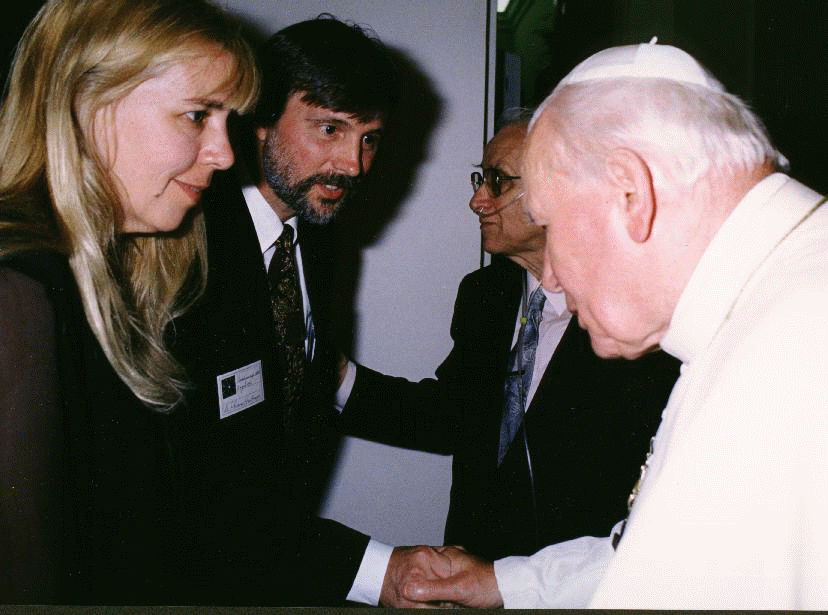
Thom & Louise at a "private audience" with His Holiness Pope John Paul II at his summer palace, Castle Gandolfo, Italy
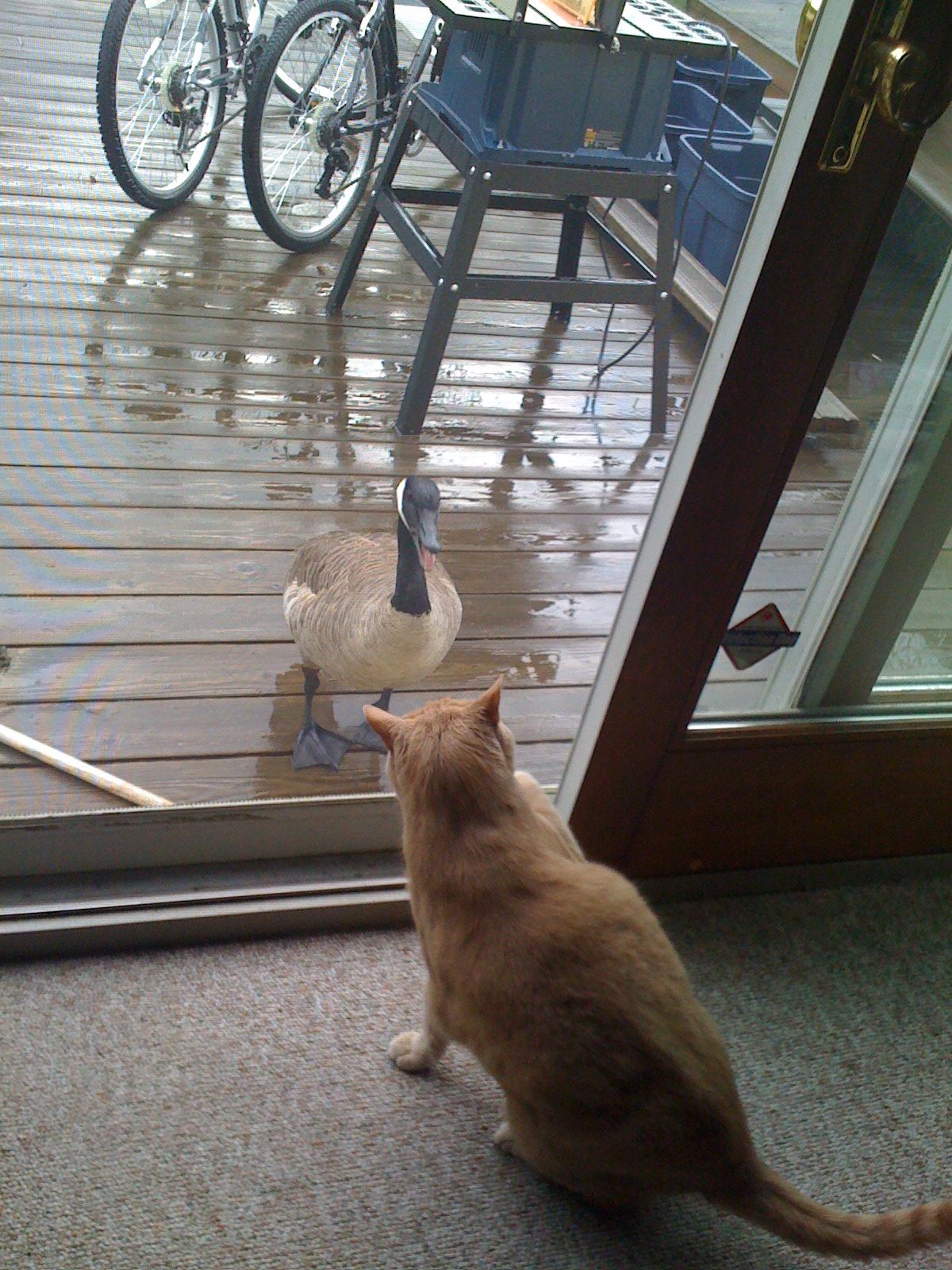
From The Thom Hartmann Reader:
"Thom Hartmann seeks out interesting subjects from such disparate outposts of curiosity that you have to wonder whether or not he uncovered them or they selected him."
From Cracking the Code:
"No one communicates more thoughtfully or effectively on the radio airwaves than Thom Hartmann. He gets inside the arguments and helps people to think them through—to understand how to respond when they’re talking about public issues with coworkers, neighbors, and friends. This book explores some of the key perspectives behind his approach, teaching us not just how to find the facts, but to talk about what they mean in a way that people will hear."
From The Thom Hartmann Reader:
"With the ever-growing influence of corporate CEOs and their right-wing allies in all aspects of American life, Hartmann’s work is more relevant than ever. Throughout his career, Hartmann has spoken compellingly about the value of people-centered democracy and the challenges that millions of ordinary Americans face today as a result of a dogma dedicated to putting profit above all else. This collection is a rousing call for Americans to work together and put people first again."

Teaching Tolerance Issue 53, Summer 2016 - Feature (fair use)
"Why Talk About Whiteness?
We can't talk about racism without it."
By Emily Chiariello:
Editor’s note: The author of “Why Talk About Whiteness?” is a white anti-bias educator. While the material in this story is relevant to all readers, many of the challenges the author poses are directed at white readers, hence the use of “we” and “us” in certain places.
“I don’t think I’ve ever come across anything that has made me aware of my race. I don’t believe there is any benefit of anybody’s particular race or color. I feel like I’ve accomplished what I’ve accomplished in life because of the person I am, not because of the color of my skin.”
These are the observations of a white female participant in The Whiteness Project, Part I, an interactive web-based collection of voices and reflections of Americans from diverse walks of life who identify as white. Her statement illustrates why educators, activists and allies doing racial justice work are increasingly focused on the importance of examining whiteness: It’s impossible to see the privilege and dominance associated with white racial identity without acknowledging that whiteness is a racial identity.
This fundamental disconnect between the racial self-perceptions of many white people and the realities of racism was part of what motivated documentary filmmaker, director and producer Whitney Dow to create The Whiteness Project. “Until you can recognize that you are living a racialized life and you’re having racialized experiences every moment of every day, you can’t actually engage people of other races around the idea of justice,” Dow explains. “Until you get to the thing that’s primary, you can’t really attack racism.”
Dow’s work, among other activism and scholarship focused on whiteness, has the potential to stimulate meaningful conversations about whiteness and move white folks past emotions like defensiveness, denial, guilt and shame (emotions that do nothing to improve conditions for people of color) and toward a place of self-empowerment and social responsibility.
Whiteness, History and Culture
Why does whiteness fly beneath the race radar? The normalization of whiteness and the impenetrable ways it protects itself are cornerstones of the way institutions function in the United States. In a 2015 interview, Pulitzer Prize-winning writer Junot Díaz said of the United States, “We live in a society where default whiteness goes unremarked—no one ever asks it for its passport.”
This poses a challenge for educators committed to racial justice. We know it’s important to make space in our classrooms to explore students’ cultures and identities, but when it comes to white students, many are left with questions about how to talk about group membership and cultural belonging. These questions stem in part from the fact that, while it’s true whiteness is seen as a social default, it is not true that whiteness is the absence of race or culture. As one male participant in The Whiteness Project puts it, “As a white person, I wish I had that feeling of being a part of something for being white, but I don’t.”
One place to start is by acknowledging that generations of European immigration to the United States means that our country is home to the most diverse white population anywhere in the world. Differences between Jewish, Irish, Italian, Greek, Polish or German culture matter—a lot—to those who identify as ethnic whites. Part of “seeing” whiteness includes caring about these rich histories and complicating our discussions of race by asking questions about the intersection of ethnicity and race.
In her work on white racial identity development, diversity expert Rita Hardiman explains that, as white people become more conscious of whiteness and its meaning, we may simultaneously struggle with two aspects of identity: internalized dominance and the search for cultural belonging. The search for culture draws some white people to multiculturalism and appreciation of other cultures and heritages. Others find roots outside the container of race, woven into proud family histories. A small minority cling violently to their white cultural identity, sometimes with tragic consequences. (In any case, it is important to note that the ability to trace one’s genealogy is an inherited privilege not enjoyed by most African Americans, the majority of whom are descendants of enslaved people.)
Reconciling the meaning of white culture can be complicated by the fact that being white has not always meant what it means now. Whiteness—like all racial categories—is a social construct: Its meaning is culturally and historically contextual. The physical characteristics we now associate with whiteness have been artificially linked to power and privilege for the purpose of maintaining an unjust social hierarchy.
Attorney, scholar and anti-racist educator Jacqueline Battalora of Saint Xavier University studies the legal and historical construction of whiteness in the United States, what she calls the “invention of white people.” In her book Birth of a White Nation, she shows that white people didn’t exist—even as a label, much less as a race—until the end of the 17th century when the elite class enacted anti-miscegenation laws and other laws designed to keep black and white workers separate, both efforts to, in part, divide and control an increasingly ethnically diverse labor force. As students enter middle and high school, teaching about this history and about the concept of racial construction is another way educators can bring discussion about whiteness—and its relationship to racial justice—into the classroom.
Scholars Michelle Alexander (The New Jim Crow) and Jacqueline Battalora (Birth of a White Nation) both name Bacon’s Rebellion as a pivotal event in the historical construction of whiteness in the United States. During the rebellion, disgruntled white settlers, indentured servants and enslaved Africans joined forces to resist the ruling class and local Indian tribes. Their actions worried elites and led them to enact a more rigid racial class system. Read more about Bacon’s Rebellion here.
Got Privilege? Now What?
In 1988, anti-bias educator Peggy McIntosh published her now-classic essay “White Privilege: Unpacking the Invisible Knapsack.” In it, she describes the phenomenon of white privilege as a collection of “unearned assets that I can count on cashing in each day, but about which I was meant to remain oblivious.”
McIntosh’s essay launched the term white privilege into wider academic and activist circles (where the essay is still widely read), but recently the term has gained a mainstream audience. Examples include #OscarsSoWhite, Latina college student Thalia Anguiano asking Hillary Clinton for examples of her white privilege and Jon Stewart challenging Bill O’Reilly to defend why he believes white privilege doesn’t exist. White rapper Macklemore mused about Black Lives Matter in his nine-minute song “White Privilege II,” in which he asks, “Is it my place to give my two cents?
Or should I stand on the side and shut my mouth?”
While these examples are positive in that they make whiteness and white privilege more visible, popular discussions of white privilege can also prompt backlash.
“I think it’s very hard in a culture that’s built around this myth of the individual American who makes their own way, to say, ‘Well, you actually have a built-in inherited advantage,’” Dow points out. “We view ourselves as just people, but that this country was founded on racist white supremacist principles is undeniable. I think people feel implicated because there’s a cognitive dissonance built into how Americans view themselves.”
But even if white students are able to overcome this dissonance and acknowledge their privilege, is that enough? Recognizing white privilege is a necessary but insufficient means for confronting racism and increasing opportunities for people of color. In fact, acknowledging white privilege but taking no initiative to own it or address it can be harmful and counterproductive. Molly Tansey, a member of the Young Teachers Collective and co-author of “Teaching While White,” says, “Early on in doing this work, I was definitely driven by the self-satisfaction.” She talks about the need white people sometimes have to make their non-racism visible, giving the example of someone who takes a “selfie” at a protest to post on Facebook.
We haven’t acknowledged our white privilege if we’re only talking about it with people of color—who are already well aware of white privilege. White allies need to talk to other white people who may not see their privilege. Though it’s less comfortable, Tansey says, naming whiteness and its privileges among white friends, family and colleagues is where the real work needs to be done.
We’re also not adequately engaging the concept of white privilege if we leave intersectionality out of the conversation; doing so has the potential to render other identities invisible and obscures how multiple systems of oppression work. Blogger Gina Crosley-Corcoran made this point in her blog “Explaining White Privilege to a Broke White Person,” in which she describes the difficult process of identifying with her white privilege because of her low-income upbringing. The same could be true for any white person who has a disability, doesn’t speak English, is undocumented or LGBT—or any combination of the above. Intersectionality does not erase white privilege, but may affect a person’s experience of privilege.
Acknowledging white privilege must be followed with anti-racist action. As scholar Fredrik deBoer argued in a January 2016 article for The Washington Post, “Disclaiming white privilege doesn’t lower African Americans’ inordinately high unemployment rate or increase educational opportunities for children of first-generation immigrants. The alternative is simpler, but harder: to define racism in terms of actions, and to resolve to act in a way that is contrary to racism.”
Affirming a Positive White Identity
Making whiteness visible, understanding the diversity and history of whiteness, and going beyond white privilege can help educators and students alike find positive answers to the question: What does it mean to be white? For Melissa Katz, who authored “Teaching While White” with Tansey and is also part of the Young Teachers Collective, the answer is central to her self-realization as a white woman and as a teacher committed to social justice.
“The positive sense of whiteness is knowing that you’re working towards something bigger,” she says. “By examining your whiteness and by working to dismantle [racist] institutions, you’re working towards equity.”
For Dow, exploring whiteness—and inviting others to do the same—was transformative. “I could impact the paradigm because I actually was an active component. I didn’t have to do something outside,” he says. “I could do something inside and that would change things. It kind of eliminated guilt for me. It made me feel incredibly empowered and really enriched my world.”
Anti-racist Understandings for Educators
Get fired up about racial injustice! Recognizing that “a threat to justice anywhere is a threat to justice everywhere” is the foundation of white allyship. Use these understandings to help you and your students face what can be highly emotional and, at times, uncomfortable work.
Colorblindness denies students’ full identities.
By saying “I don’t see race” to indicate we don’t hold racial biases about our students, we’re essentially saying to people of color, “I don’t see you.” Colorblindness upholds the dominant framework of whiteness and invalidates the racial identities and lived experiences of people of color.
Speak out, but also look in.
It’s critical that white allies respond to racial prejudice, bias and stereotypes in our everyday lives. It takes practice and sometimes comes with risk. But pointing to other people’s white privilege, without (or instead of) looking at our own, is a distraction from true anti-racist action.
Avoid white noise and white silence.
It’s important to listen when people of color talk about their experiences with oppression and not to dominate conversations about race. But opting out altogether can be just as harmful. “The racial status quo is not neutral; it is racist,” DiAngelo says. “Remaining silent when given the opportunity to discuss race supports the status quo.”
Take responsibility for educating yourself about racism.
It makes sense to assume that someone who has experienced racism will have a better understanding of it than someone who has not. But when white educators expect students or colleagues of color to teach them about racism, it raises a number of problems, not least of which is people of color doing white people’s work for them.
Be down, but stay white.
75 percent of white Americans say they come in contact with “a few” or “no” black people on a regular basis—a startling fact about race relations. Living an integrated life builds cross-cultural connection and fosters empathy. Over-familiarizing with people of color—“I hang out with people of color, so I’m not racist”—reduces race to a lifestyle choice and can offer an easy way out of difficult anti-racism work. Appreciating a diverse group of friends or colleagues does not take the place of confronting white privilege, addressing internalized white guilt or responding to the biases of other white people.
Don’t take it personally—it’s not about you!
White people have come to expect a level of racial comfort. When that expectation is met with racial stress, DiAngelo explains the result can be White Fragility: “White Fragility is a state in which even a minimum amount of racial stress becomes intolerable, triggering a range of defensive moves. These moves include the outward display of emotions such as anger, fear and guilt, and behaviors such as argumentation, silence and leaving the stress-inducing situation. These behaviors, in turn, function to reinstate white racial equilibrium.”
These understandings were drawn from the work of Robin DiAngelo (What Does It Mean to Be White? Developing White Racial Literacy), Heather Hackman (Everyday White People Confront Racial and Social Injustice: 15 Stories) and Jennifer Seibel Trainor (“My Ancestors Didn’t Own Slaves: Understanding White Talk about Race”).
Bring The Whiteness Project to your classroom with this activity.
Toolkit
https://www.tolerance.org/magazine/summer-2016/why-talk-about-whiteness